Building Number Sense Through Play
As your child prepares for kindergarten, one of the most important skills they can build is number sense.
Number Sense is the ability to understand what numbers represent and how they relate to each other. Number sense is much more powerful than just being able to count high. A child with strong number sense knows that if they have three apples and add one more, they have four apples. They can see and feel how the number of apples changes. Children with strong number sense can solve problems, compare amounts, and understand how numbers fit together. Research shows that when children feel confident with numbers early on, they do better in math later in school. That’s why we focus on building number sense before kindergarten—and the ten frame is one of our favorite tools to do that.
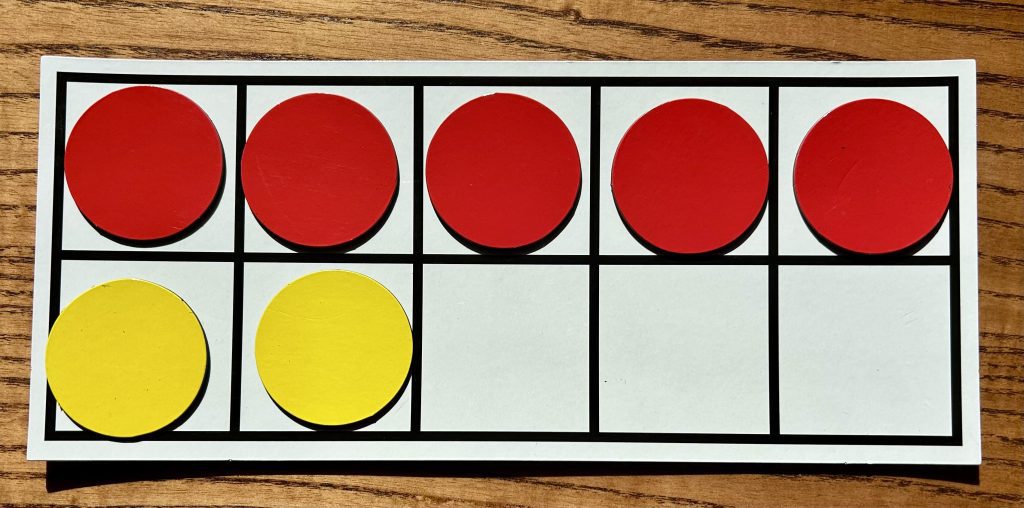
The great thing about ten frames is that you don’t need to buy anything special. You can make one at home using things you already have. Everyday materials make wonderful ten frames! You can cut or tape an egg carton down to ten paces. You can use a muffin tin or an ice cube tray—each little space becomes a “frame” for one object. You can even make one with tape on your table or floor, or draw boxes with chalk on the sidewalk.
A ten frame is a simple rectangle divided into ten spaces—five on top and five on the bottom. Children place one object in each space to show a number. When they fill five spaces, they can see that five is more than four and less than six. When they add one more object, they see how numbers grow. This hands-on way of learning helps children connect the words they say to what they actually see and touch. Counting is still important, but it’s only part of early math. When children learn what numbers mean, they build a strong foundation that will help them in all future math learning.
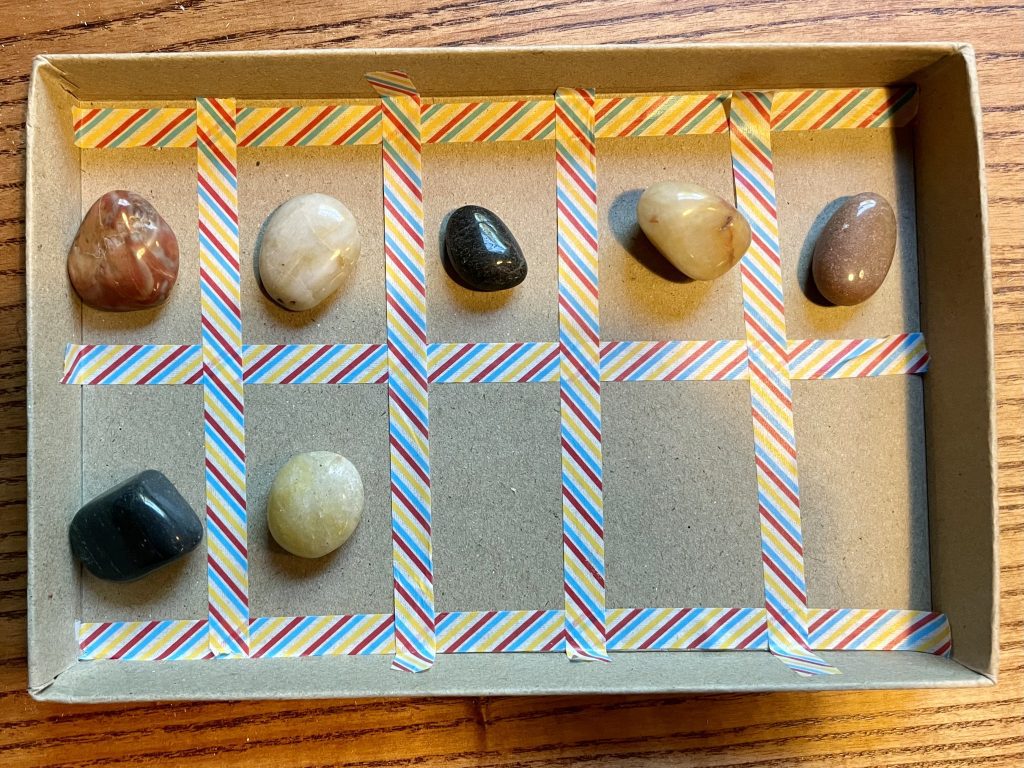
Once you have your ten frame, invite your child to fill each space with something small: buttons, cereal pieces, dry pasta, pom-poms, or toy cars. Ask simple questions as they play:
- How many spaces are full?
- How many are empty?
- What happens if you add one more?
- What happens if you take one away?
These kinds of questions help your child think about numbers in a meaningful way. They start to notice patterns; like how five and five make ten, or how two and three make the same as four and one. They may not use those exact words yet, but their brains are already beginning to understand the ideas behind addition and subtraction.
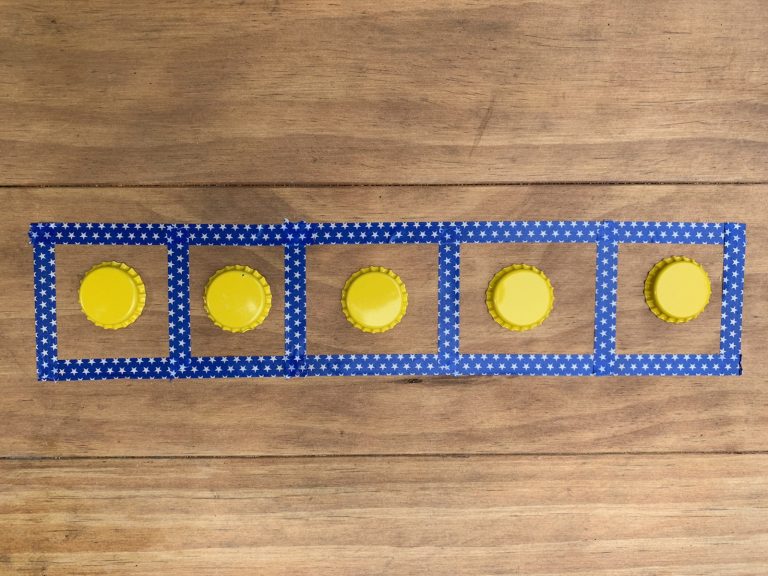
Younger children can start with a five frame—just one row of five spaces. This smaller set helps them practice matching one object to one space, which builds one-to-one correspondence. Older preschoolers can move up to a ten frame when they are ready. They can fill the top row first and then the bottom, just like reading from left to right. This pattern helps them see numbers as parts of a whole, not just single, separate units.
You can also connect ten frame play to your child’s favorite stories. For example, if you read Pete the Cat and His Four Groovy Buttons, use buttons as your counters. Place one button in each space as you count along in the story. After counting, ask, “How many buttons do you have?” If your child can answer without counting again, they’re beginning to understand cardinality—knowing that the last number they said represents the total number of items. That’s a key kindergarten skill learned through play, not memorization.
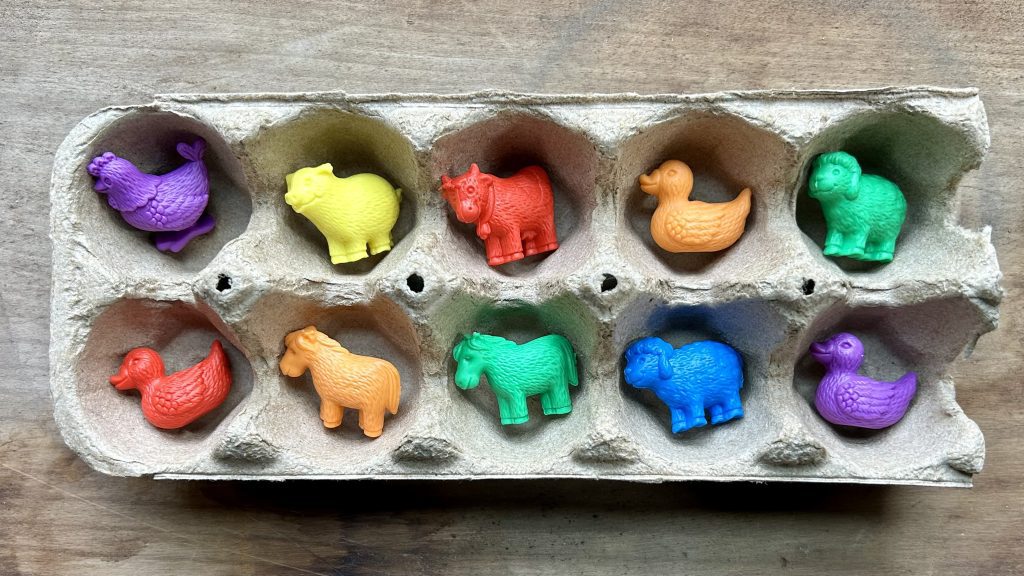
The best part of using ten frames is that it turns math into something joyful and natural. When children explore with real objects—filling spaces, sorting buttons, or counting snacks—they’re learning math in a way that makes sense to them. They don’t need worksheets or flashcards; they just need time, materials, and an adult who encourages them to play and explore.
So whether you’re using an egg carton, a muffin tin, or a few buttons on the floor, remember, math learning should always feel like play. When children play with numbers, they aren’t just counting, they’re building confidence, curiosity, and a lifelong love of learning.