Loose Parts Play
Introduction
Have you ever emptied your child’s pockets and found a rock, a bottle cap, a feather, or an acorn? Those little “treasures” are more than just trinkets — they’re invitations. Children are natural collectors. They notice the beauty in small things adults often overlook — the smoothness of a pebble, the swirl on a shell, the shine of a button. When they pick something up,they’re not just finding it; they’re thinking about it. If it touches the hand, it touches the brain.In the world of early childhood we call these treasures, loose parts. Loose parts are the heart of imaginative play. When we offer children an assortment of items to explore, something magical happens. They sort, build, imagine, test, and transform. A pile of corks and lids becomes a bakery, a castle, a car wash. We don’t have to set the agenda.Simply gather what you have around — the “pocket treasures,” bits of ribbon, boxes, stones, or bottle caps — and watch what unfolds. You’ll see problem-solving, storytelling, cooperation, and creativity in action.
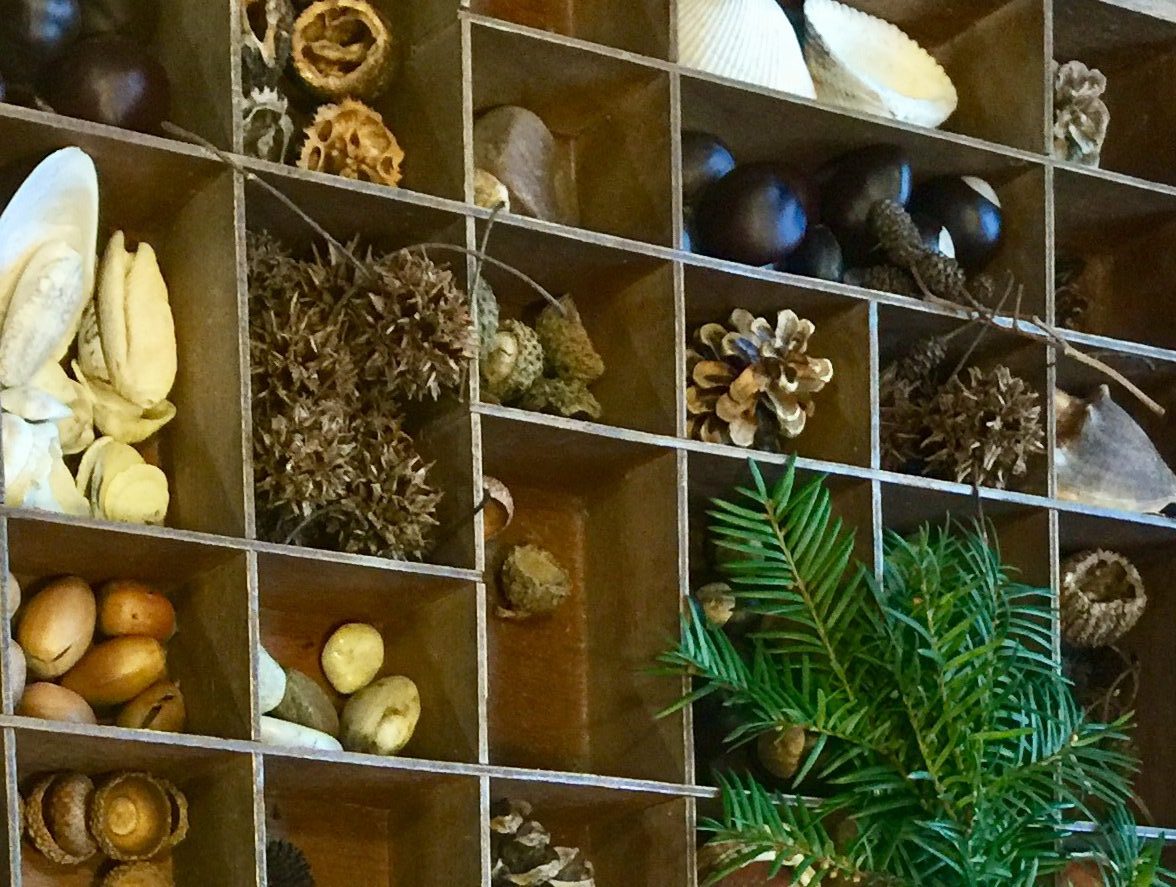
Gather Materials
Everyday items that draw your child's attention.
Note: Small parts pose a choking hazard and are not appropriate for children age five or under. Be sure to choose lesson materials that you feel are safe for your child and that you are comfortable letting your child use.
Activity
- Gather “loose parts”
Collect everyday items — rocks, lids, shells, corks, fabric scraps, sticks, pinecones, or bottle caps. These open-ended materials are often free and endlessly inspiring. - Set them out
Place the items in baskets or trays. For outdoor storage and play, a collander is a great choice. Give your child time to explore. There’s no right or wrong way to play. Watch what happens when they mix and match. - Observe
You’ll see imagination and problem-solving unfold naturally: towers built, patterns sorted, pretend worlds created. This is learning in motion — fine motor skills, early math, scientific thinking, and collaboration are all at work.
The next time you find “pocket treasures,” hold onto them. Those small discoveries are clues to what fascinates your child. Loose parts play is simple, joyful, and deeply educational — the kind of learning that lasts long after the play is over.
If you'd like more early math ideas and activities, be sure to check out our Early Math Counts webpages!