Creating Maps
Introduction
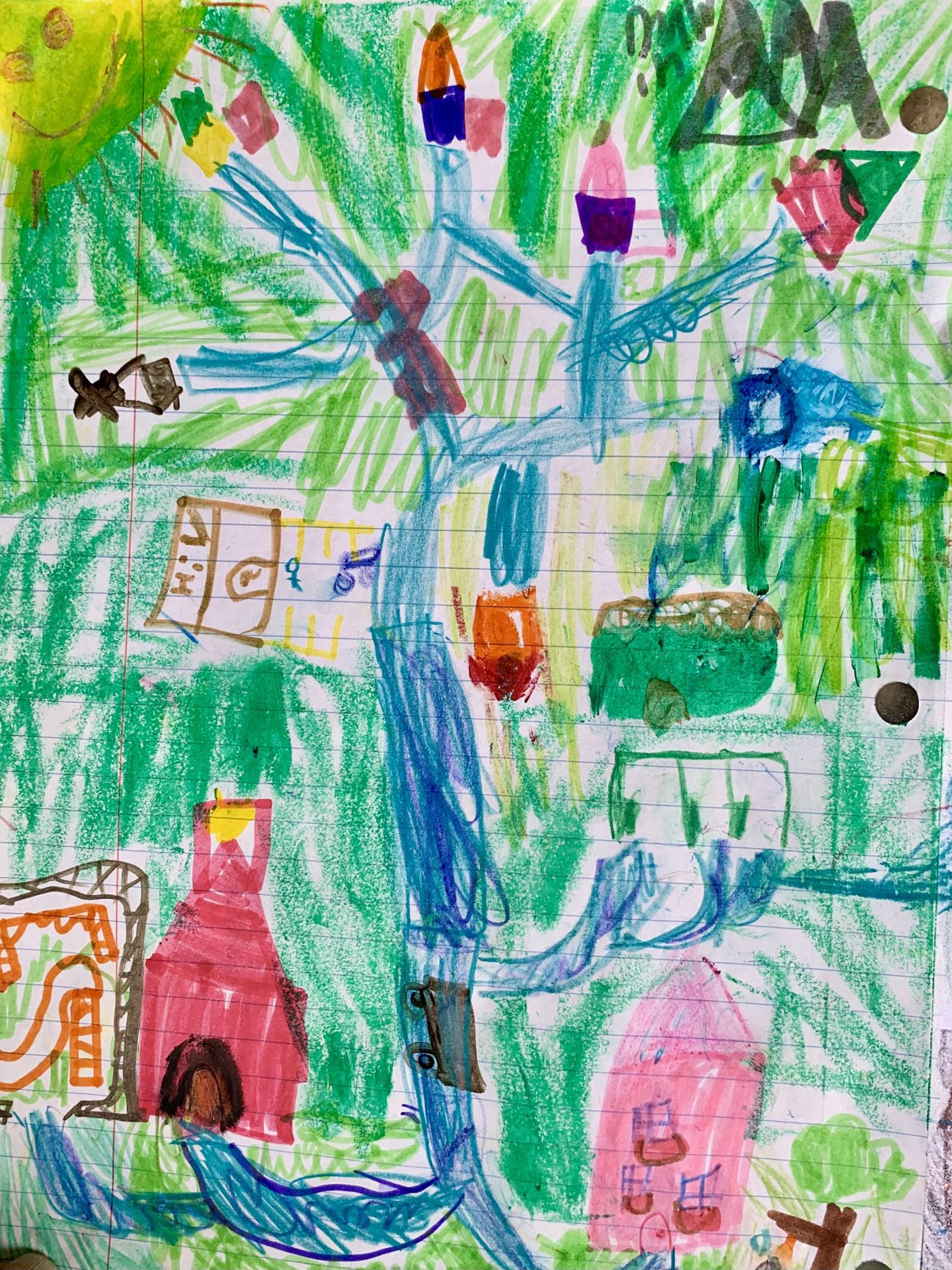
Children are naturally curious, always exploring and figuring out how the world around them works. One powerful way to nurture this curiosity while supporting early math, science, and STEM skills is through the simple act of mapping. Using maps helps children learn about distance and concepts like near, far and next to. Children begin to figure out how objects relate to other objects, such as where they are in space and how far apart they are. A child’s map may look simple, but it’s filled with real brain work:planning, observation, and exploration.Every path they trace strengthens their ability to understand the world around them. These are skills that will support their growth in math and science.
Gather Materials
- Paper and crayons or markers (optional)
- Familiar routes your child knows: a walk to the park, the drive to the store, or a trip to grandma’s house
Note: Small parts pose a choking hazard and are not appropriate for children age five or under. Be sure to choose lesson materials that you feel are safe for your child and that you are comfortable letting your child use.
Activity
- Pick a Familiar Route
Choose a route your child knows well—whether it’s walking, biking, or driving. A simple, regular route (like walking to the park) will help make the activity feel comfortable and relatable. - Trace it Verbally
Ask your child to describe the route out loud: “Which way do we go first? Left or right?” Encourage them to use directional words such as “forward,” “backward,” “left,” “right,” “over,” or “around” to guide their thoughts. This is where you can help them think about the different ways they experience space. - Act it Out
Take the trip together, following the directions your child gives. In the car, you can let them be the “navigator”: “Turn at the big tree, then go straight until we see the stop sign.” This will help them connect the verbal description with physical movement, deepening their understanding of spatial relationships. - Draw the Path (Optional)
On paper, have your child sketch out the route, marking important landmarks like stop signs, trees, or playgrounds. They can use simple shapes or symbols—accuracy doesn’t matter as much as the effort to observe and map their environment. - Predict and Problem-Solve
Along the way, pause and ask questions like: “What comes next?” or “Which way should we turn?” Encourage your child to think ahead and explain their reasoning: “Why did you go this way?” or “What might happen if we went a different direction?” This fosters their problem-solving skills and encourages critical thinking.
You can read more about our mapping adventures, Mapping Fun for Young STEM Learners over on our Early Math Counts website!