Candy Chaos, Math Magic
Introduction
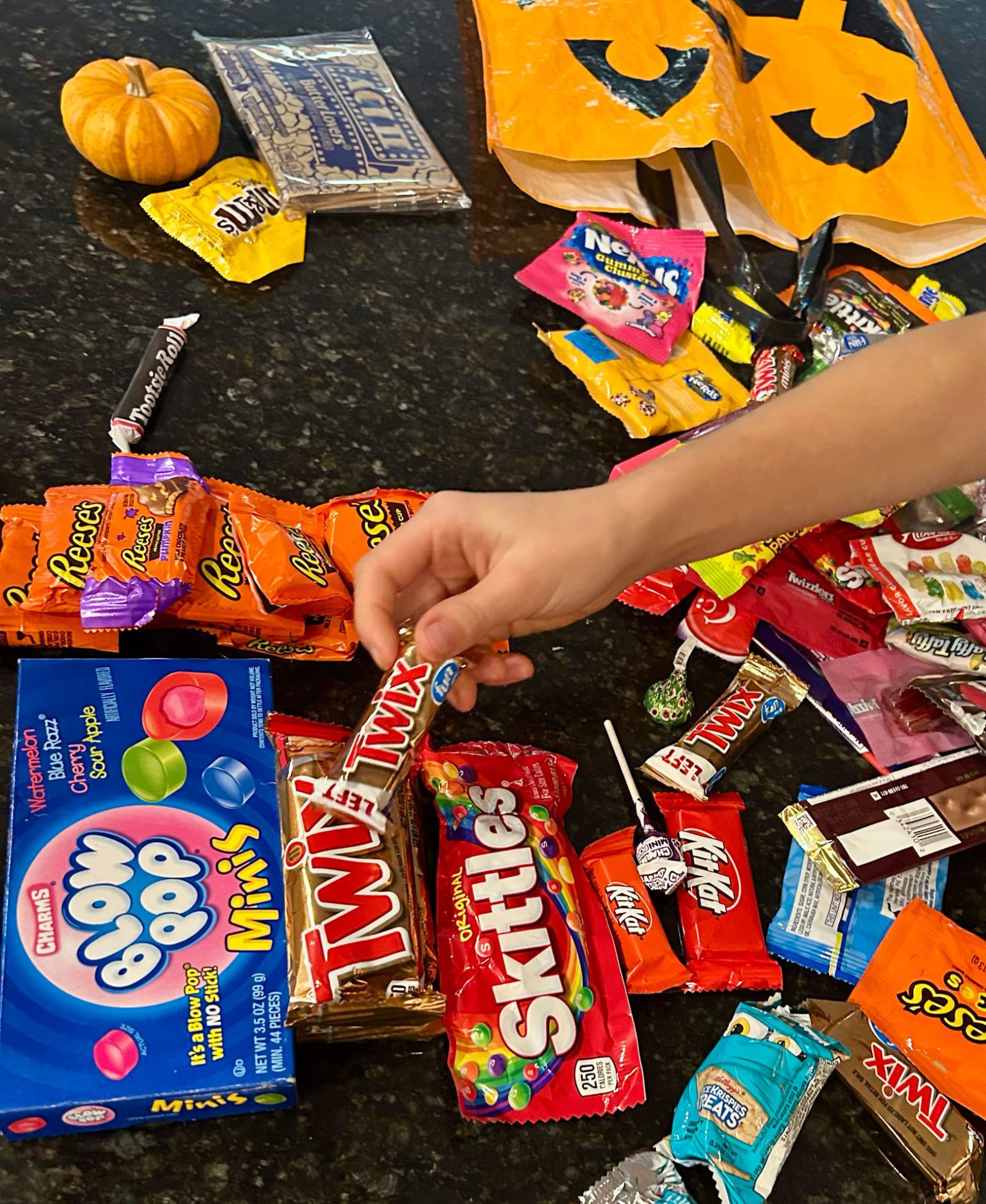
We all remember doing it—coming home from trick-or-treating, a birthday party or a parade and immediately dumping the entire bag of goodies onto the floor. Without any instructions, children naturally dive into sorting, counting, grouping, comparing, trading, and organizing. It’s pure, child-led math play happening right before our eyes.The beauty is that adults don’t need to direct this activity at all. Just let your child explore their treasures in their own way. When they’re done, you can gently highlight the amazing math thinking they used—and maybe help count the pieces as everything gets put away. It’s a simple, everyday moment that shows just how capable and brilliant young learners already are.
Gather Materials
A pile of candy
Note: Small parts pose a choking hazard and are not appropriate for children age five or under. Be sure to choose lesson materials that you feel are safe for your child and that you are comfortable letting your child use.
Activity
- When children dump out their bag of candy or parade goodies, they are engaging in natural, meaningful math exploration—not just play.
- Sorting items by type, size, or color helps develop early classification skills.
- Counting how many pieces they have (or how many of each kind) builds number sense and strengthens one-to-one counting.
- Making piles or groups (favorites, trade items, or “save for later”) supports understanding of sets and grouping.
- Comparing piles to see which has more, less, bigger, or smaller items builds comparison and ordering skills.
- Eating a piece or combining piles introduces basic addition and subtraction.
- Deciding which items to keep or trade strengthens reasoning and decision-making skills.
- All of this math happens naturally, without direct instruction.
- Adults don’t need to guide the activity—simply observe.
- Later, simple comments like “Look at how you sorted those—that’s math!” or “You figured out which pile had more—great math thinking!” help children recognize their own mathematical abilities.
If you'd like more early math ideas and activities, be sure to check out our Early Math Counts webpages!