Family Art
Introduction
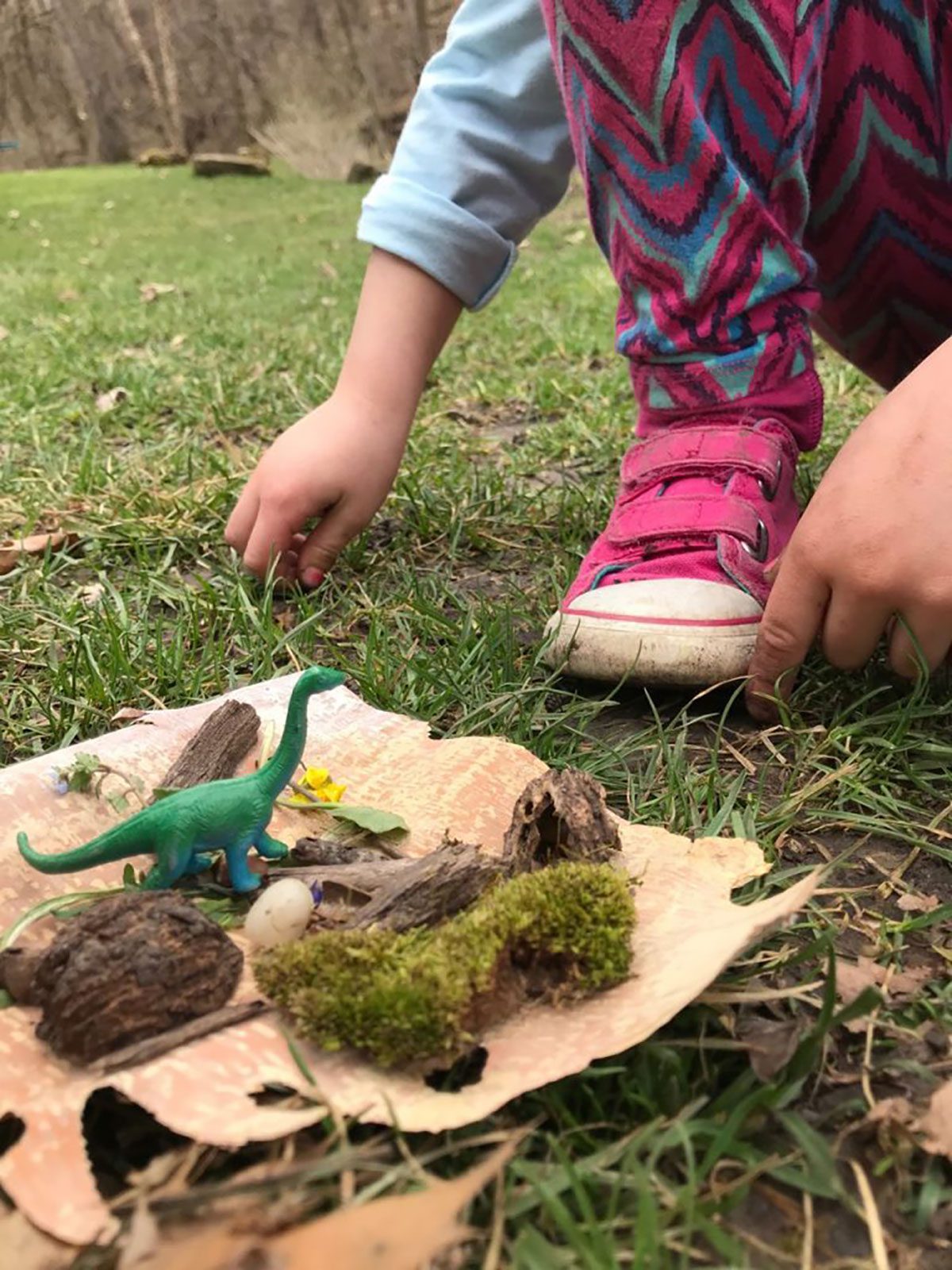
Those little outdoor treasures your child loves to collect—sticks, stones, leaves, and shells—are actually the perfect materials for a simple and beautiful kind of play called ephemeral art. Ephemeral (pronounced ih-fem-er-uhl) means temporary, or made to last just a short time. As children design, arrange, and rearrange their creations, they build fine motor skills, problem-solving abilities, and flexible thinking. Because the art isn’t meant to be permanent, kids feel free to experiment, work together, and start over as often as they like—building confidence, creativity, and resilience along the way.
And here’s a bonus parents love: this might be the cleanest art project you’ll ever do. There’s no paint, glue, or glitter involved. Cleanup is as simple as returning the materials to nature—or leaving them behind for the next curious creator to discover.
Gather Materials
Collection Containers: Small buckets, bags, or baskets for gathering.
A variety of natural loose parts such as pine cones, pine needles, acorns, acorn lids, leaves, flower petals, rocks, seashells, twigs, winter berries, driftwood, feathers, bark, grasses, seedpods, reeds, snow and ice
Note: Small parts pose a choking hazard and are not appropriate for children age five or under. Be sure to choose lesson materials that you feel are safe for your child and that you are comfortable letting your child use.
Activity
Step 1: The Gathering Hunt (Science & Motor Skills)
- Search and Collect: Go on a walk to collect your materials.
- Observation & Sorting: As you collect, ask questions:
- "Can you find a shorter stick?" (Comparing length)
- "Let’s put all the rough things in this bucket and the smooth things in that one." (Classifying by texture)
- "How many red leaves can you find?" (Counting)
This process of touching, describing, and classifying natural materials builds a foundation for scientific observation and vocabulary.
Step 2: The Design Challenge (Math & Engineering)
- Find Your Canvas: Choose a natural spot for your creation—a patch of dirt, a flat rock, a tree stump, or a sidewalk crack.
- Model and Design: Encourage your child to design a structure, pattern, or picture using the collected materials. There are no rules!
Step 3: Storytelling (Imagination & Attention Span)
- Tell a Story: As the piece comes together, ask your child to narrate the story of their art. Is it a home for a tiny woodland creature? A person? Storytelling encourages imagination and helps them focus on the task, building their attention span.
- Document and Share: Before you leave the site, you may want to take a picture! This photo is the permanent record of the temporary art.
If you'd like to read more about Ephemeral Art, check out our Trash or Treasure blog and lesson plans over on our Early Science Matters website!