The Magic Of Sand Play
Introduction
Can I let you in on a little secret that keeps children happily busy for what feels like forever? Give them a sandbox. Children love to dig, build, and playin sand for hours, and you barely have to lift a finger. Playing in sand strengthens fine motor skills, hand-eye coordination, and problem-solving—essential foundations for writing, math, and following directions. It also nurtures creativity, cooperation, and patience, giving children a head start on the social-emotional and cognitive skills they’ll use in kindergarten and beyond. The secret ingredient? Water. A little water transforms loose sand into a moldable material perfect for castles, tunnels, and sculptures. Combine sand and water, and you unlock a world of creative play that keeps kids engaged, calm, and blissfully entertained for hours on end.
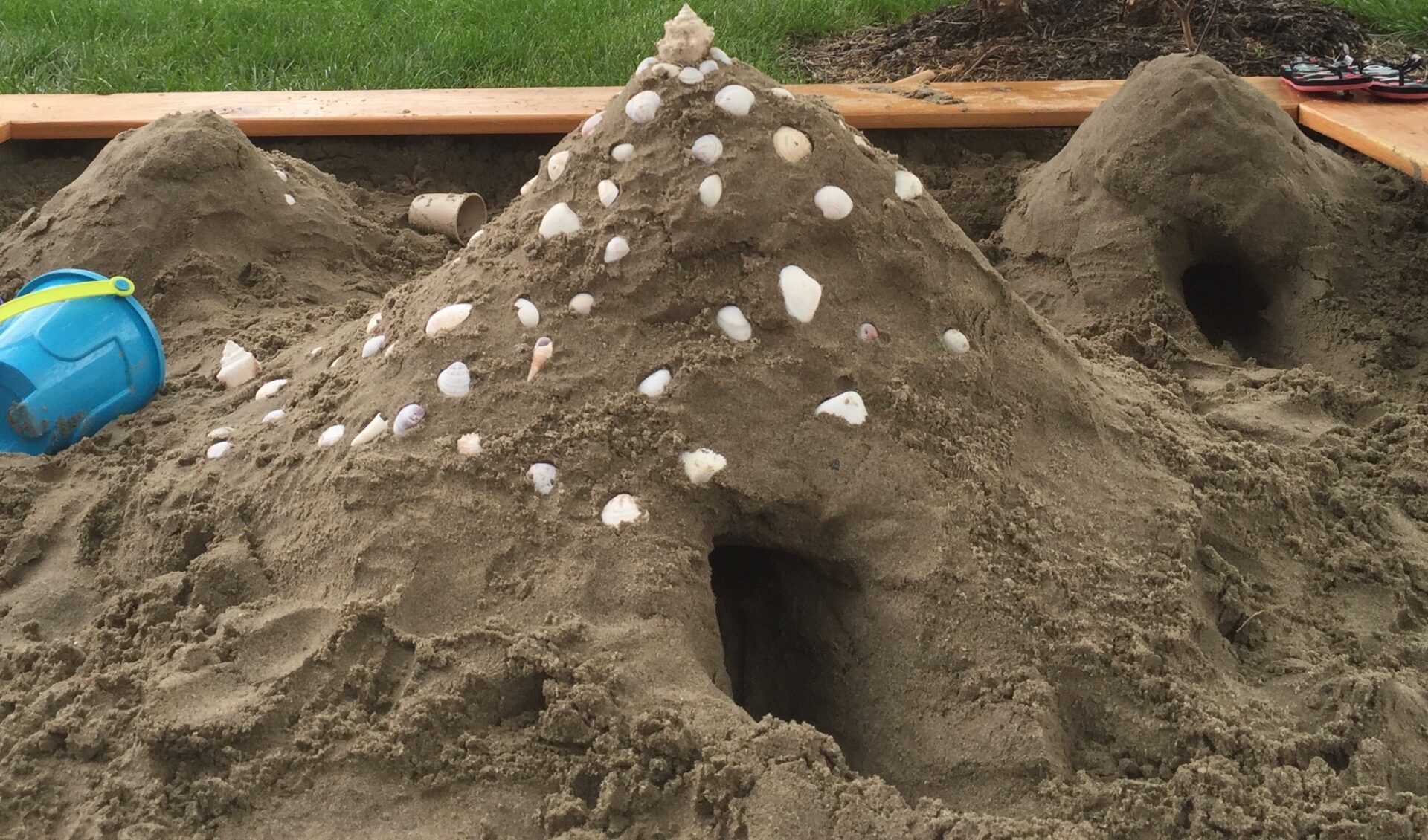
Gather Materials
- Sandbox, sand pit, or sand area (backyard, playground, beach)
- Buckets, cups, small shovels, or scoops
- Water source: hose or buckets
- Optional loose parts: rocks, shells, sticks, small toys
- “Shoe basket” for easy cleanup. Trust me, barefoot are the best!
Note: Small parts pose a choking hazard and are not appropriate for children age five or under. Be sure to choose lesson materials that you feel are safe for your child and that you are comfortable letting your child use.
Activity
- Set the Stage:
Invite your child to explore the sand freely. Encourage digging, pouring, patting, and molding. - Add Water:
Let your child experiment with adding water to dry sand. Watch as it changes texture and becomes moldable. Challenge them to build towers, tunnels, or sculptures that hold together. - Decorate & Explore:
Provide small rocks, shells, or sticks. Let your child decorate, count, or create patterns. This promotes creativity, vocabulary, and early math skills like sorting and symmetry. - Collaborative Play:
Invite friends or siblings to join. Sharing tools, planning a castle, or digging tunnels together encourages cooperation, negotiation, and social-emotional development.
Yes, sand can be messy—but the payoff is worth it. A quick rake before play and a nearby shoe basket keep things manageable. With a sandbox and a little water, you’re giving your child hours of joy, creativity, and hands-on learning—and believe me, a few peaceful minutes for yourself. If you would like to read more about the benefits of sand play, check out Return of the Sand Gardens on our Early Science Matters website.