Winter Sparks: Balloon Fun
Introduction
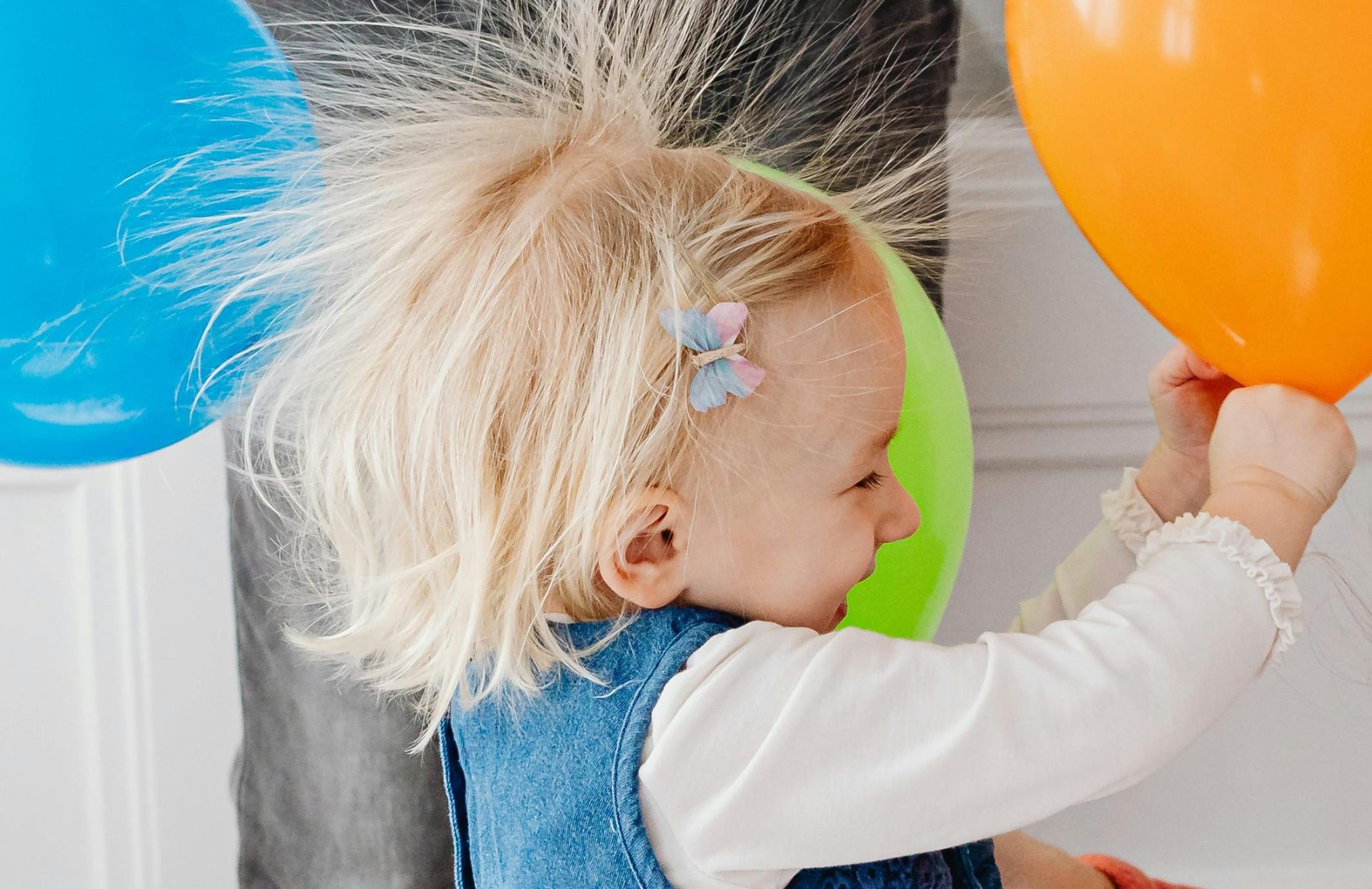
Winter is the perfect time for a little indoor magic—thanks to static electricity! When the air is crisp and dry, rubbing a balloon on a sweater, socks, or hair can make hair stand on end, balloons stick to walls, and small objects dance. Static electricity naturally evokes wonder in young children, which can pave the way for hours of child-led scientific exploration and discovery. This playful experiment keeps children happily engaged, encourages problem-solving, and helps them practice patience and turn-taking—all important for school readiness.
This activity is quick, requires little preparation and is endlessly engaging, giving children hands-on science experiences while promoting early learning skills like observation, reasoning, and cooperation.
Gather Materials
- Balloons (one per child is ideal)
- Sweaters, wool socks, or carpeted surfaces for rubbing
- Light objects to attract the balloon (small pieces of paper, tissue, or aluminum foil)
- Safe indoor space for giggles and tiny “zaps”
Note: Small parts pose a choking hazard and are not appropriate for children age five or under. Be sure to choose lesson materials that you feel are safe for your child and that you are comfortable letting your child use.
Activity
- Charge the Balloon:
Have your child rub a balloon on a sweater, hair, or socks. Watch as hair stands up or as the balloon clings to clothing—a fun winter science surprise! - Experiment with Attraction:
Hold the balloon near lightweight objects (paper, tissue, or foil) and see them move or stick. Ask, “What happens if we rub it more?” or “Can it stick to something bigger?” - Try Different Surfaces:
Rubbing balloons on winter clothes, carpet, or friends’ sweaters lets children observe which surfaces create the strongest static electricity. - Share the Fun:
Encourage kids to take turns sticking balloons to walls, shirts, or under a table. Sharing discoveries builds cooperation, patience, and social-emotional skills.
You can read all about our Static Electricity play, over on our sister site, Early Science Matters.