Flight School Fun
Introduction
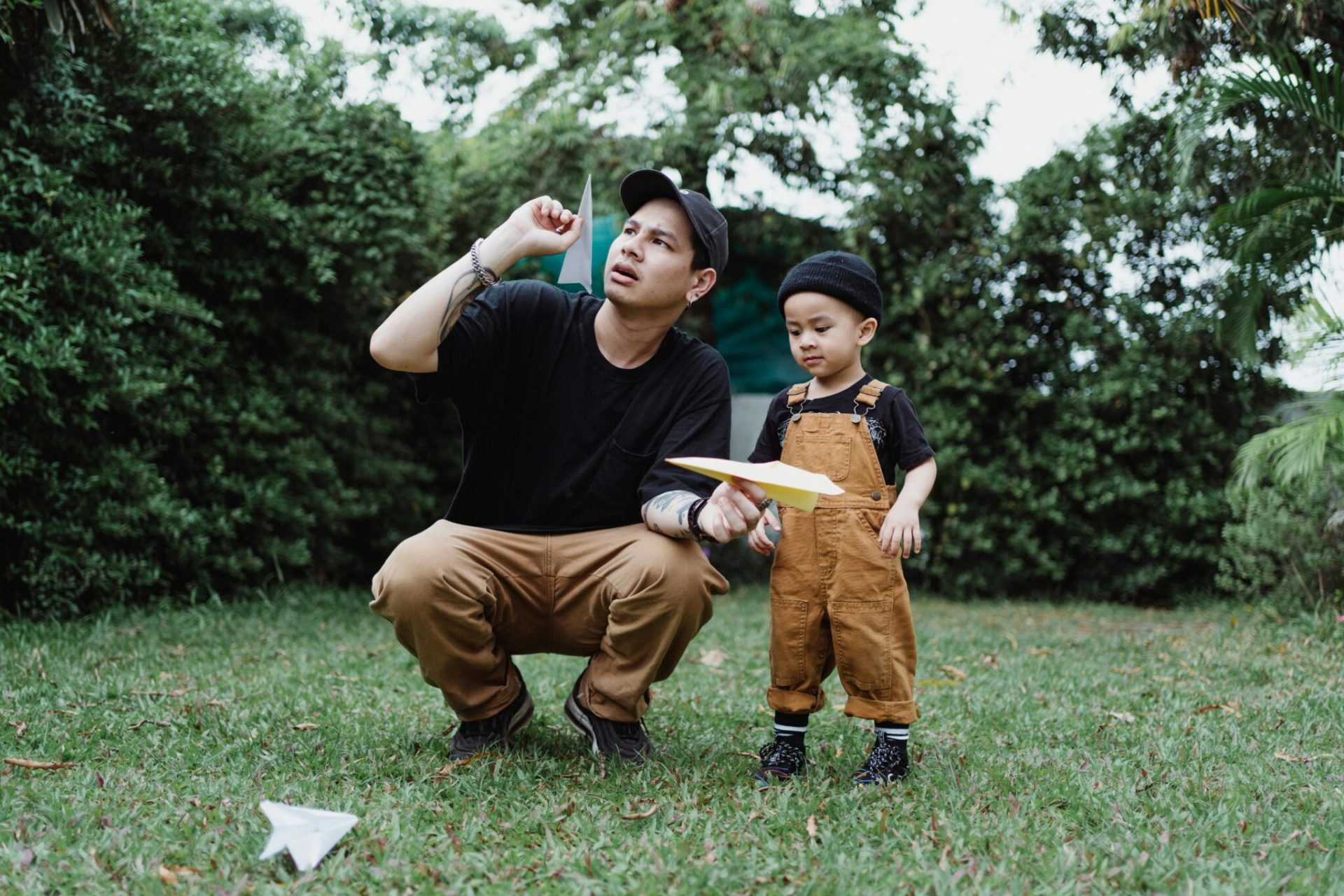
Hand a child a sheet of paper, show them a few folds, and suddenly they’re running across the room like engineers testing a brand-new invention. Folding paper airplanes is more than just fun; it’s great for fine motor skills and building focus and problem solving skills. Each crease builds hand strength for holding pencils, and lining up edges helps develop visual-motor skills for reading and writing. Testing their planes again and again also encourages focus, persistence, and flexible thinking—exactly the skills teachers hope to see when children walk into school.
Gather Materials
- A few sheets of paper (plain printer paper works great)
- A little space to fly your planes — indoors or outside
Note: Small parts pose a choking hazard and are not appropriate for children age five or under. Be sure to choose lesson materials that you feel are safe for your child and that you are comfortable letting your child use.
Activity
Every adult seems to remember their way of folding a paper airplane, even if it has been decades since they made their last one. So go ahead and give it a try, but to get your little one a great start, let’s start with the classic, simple “dart” design — it is the one most adults can fold almost on autopilot, and it gives young children a high chance of early success.
To make a basic dart, help your child fold the paper in half the long way, just like closing a book. Open it back up, then fold the top two corners down so they meet that center line and make a nice sharp point. Fold each side down one more time to make long, skinny wings. Remind your child to line up the edges and press the creases firmly with their fingers. That’s it — simple, quick, and ready to fly.
What to do if…
…the corners don’t meet in the middle.
Not a big deal. Just remind your child to slow down and scoot the paper a tiny bit more before they press the crease. The goal is close enough, not perfect.
…the wings look uneven.
Even grown-ups get lopsided wings sometimes. Lay the plane flat and fold one wing over the other to help match them up. Children love seeing how a quick fix can make the next flight better.
…your child rushes through the folds.
Excitement is half the fun, so keep it positive. Say something like, “Let’s take one more slow fold so this plane can be super strong.” That gentle pause builds those listening-and-following-steps muscles without killing the vibe.
…the first launch is a flop.
Celebrate it. Seriously. A crash landing just means you get to test and tweak. Try bending the back of the wings up a tiny bit or giving the next throw a stronger “power push.” Kids learn more from those little adjustments than from a perfect first flight.
If your child suddenly can’t stop folding, flying, and tweaking their planes, you can ride that passion right over to our sister site, Engineering Explorers, where you’ll find more kid-friendly designs and simple ways to keep the fun (and the learning) going. It’s the perfect next step for a child who’s officially caught the paper-airplane bug. Who knew school readiness could be such fun?