The Value of Heavy Work
If you’ve ever watched your child happily push a heavy laundry basket across the floor, insist on carrying the biggest grocery bag, or crash dramatically into a pile of cushions like a young WWE wrestler, you’ve seen "heavy work" in action.
In the world of early childhood education, we talk about heavy work a lot because it's one of the most powerful tools we have for helping young children succeed in the classroom. It's the pushing, pulling, lifting, and climbing that make a child's body work just a little bit harder than usual.
Heavy work may look like play, but it's actually a form of communication between the body and the brain.
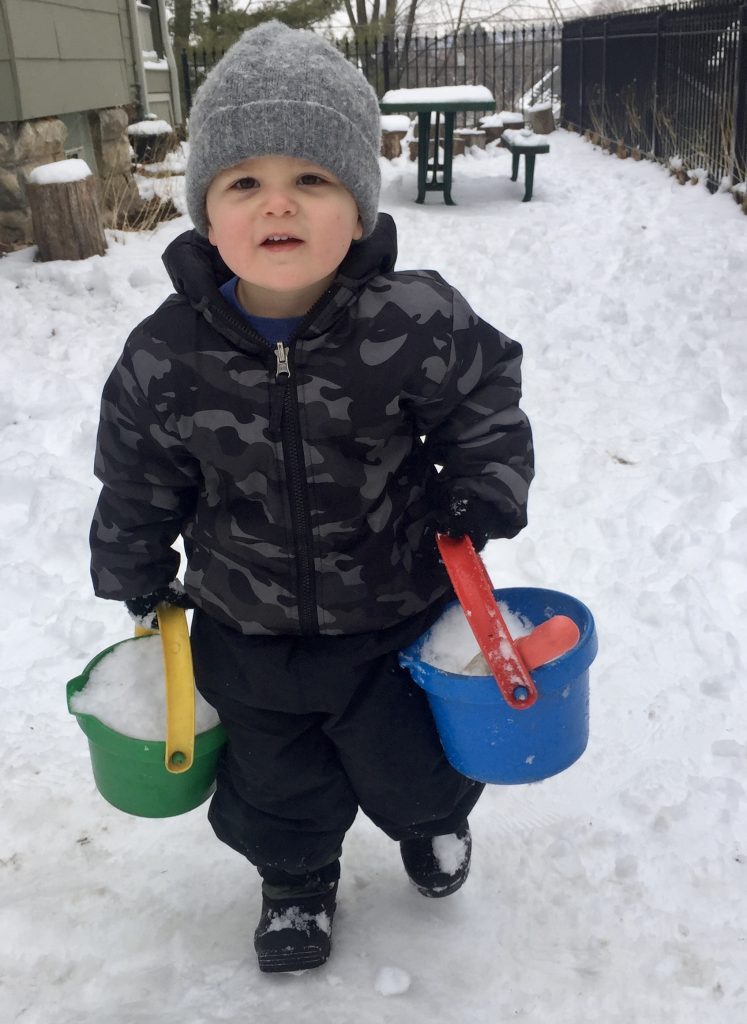
To understand why this matters, it helps to understand what’s going on inside your child’s body.
Our bodies have a hidden sense called proprioception, which is governed by tiny receptors (called proprioceptors) in our joints, muscles, tendons, and skin. These receptors tell the brain exactly where our limbs are in space and how much force we are using to move them.
When you eat popcorn while watching a movie, proprioception tells you exactly where the bowl is and where your mouth is, so you can enjoy a tasty snack without taking your eyes off of the screen. It's like an internal GPS that provides constant feedback.
When a child engages in heavy work, proprioception tells the brain where the body begins and ends. For a young child, this is incredibly grounding. It’s like reducing the static on a radio so the music comes through loud and clear. When the brain knows exactly where the body is in space, the nervous system feels safe and organized.
This feeling of control is called self-regulation, and it's the secret ingredient for school readiness. Self-regulation isn't just about behaving well in school. It’s what happens when the body and brain work together to help a child stay focused and ready to learn.
A regulated child is calm and alert. Without enough heavy work, children often seem to be wiggling nonstop, crashing into furniture, or melting down over minor frustrations. They aren't trying to be difficult. They’re simply asking their bodies for the deep sensory stimulation they need to feel steady and safe.
When we provide that sensory input through heavy work, we see a shift. Children can sit still for a story, follow two-step directions, and manage the frustration of a block tower collapsing without falling apart emotionally.
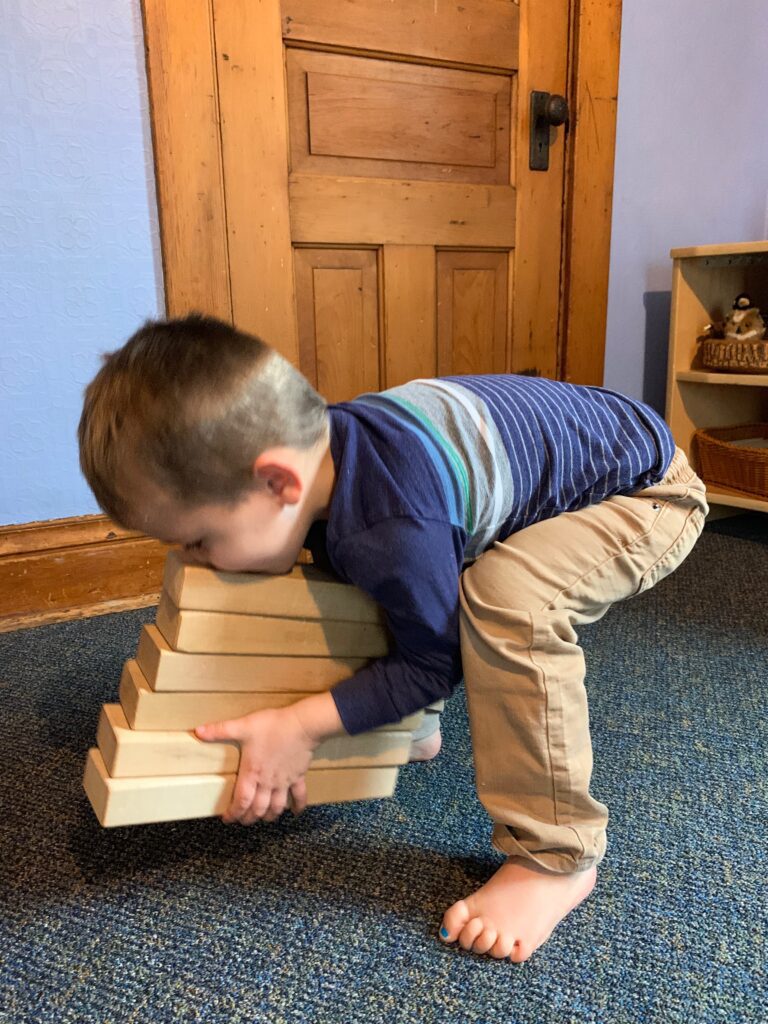
We often think of school readiness in terms of letters and numbers, but heavy work lays the foundation for these academic skills.
Children can't focus on holding a pencil correctly if their brains are working overtime just to keep their bodies upright in their chairs. Heavy work helps build strength in a child's trunk and shoulders, which in turn supports the development of the fine motor control needed for writing.
Heavy work also builds the attention span needed for listening by quieting the "must-move" alarm triggered by the nervous system when a child is dysregulated or overstimulated.
By encouraging heavy work at home—whether it's lifting a gallon of milk or pushing a chair to the table—you are helping your child build a more focused, capable brain.
Some children aren’t naturally drawn to heavy work, or they may feel insecure about their strength or coordination. If your child falls into this category, start slowly, make it fun, and let the heavy lifting happen naturally.
The goal isn't to force heavy work on your child: it's to help your child discover and enjoy the movement the body needs. Over time, your child will build strength and coordination—and the confidence to tackle heavier tasks.
When children insist on carrying backpacks that seem way too heavy, they're not just showing off. They're challenging their bodies, regulating their nervous systems, releasing brain chemicals that help them feel calm and secure, and building the focus and confidence they'll need to succeed in the classroom and in life.
Ready to help your child become a heavy lifter? Check out The Heavy-Lifting Game on our Activity Page to get started!