Become a Backyard Bug Scientist
Introduction
Did you know that when young children catch and observe insects, they’re doing much more than just playing? They are learning to think like scientists. Some insects have wings, others have many legs. Some are tiny, while others are larger and easier to spot. When children stop to look closely, ask questions, and describe what they see, they are practicing observation — a key part of the scientific process.
Children are naturally curious. When they ask, “What kind of bug is this?” or wonder where it lives and how it moves, they are forming hypotheses, making predictions, collecting data, and drawing conclusions — all skills that support kindergarten readiness. This simple outdoor activity helps build:
- Observation skills
- Vocabulary development
- Critical thinking
- Communication skills
- Early science understanding
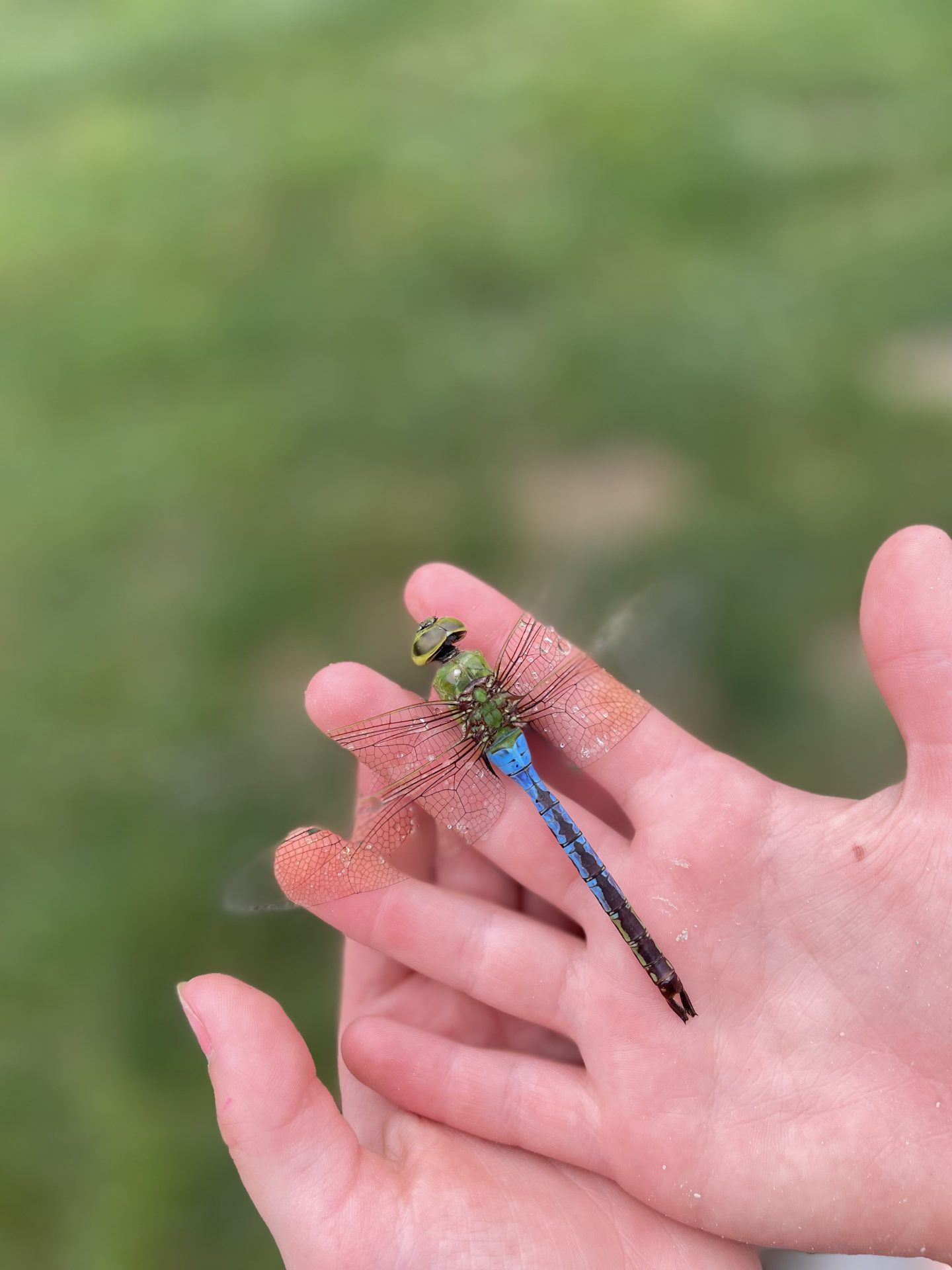
Gather Materials
A small clear container with air holes (or a magnifying bug viewer)
Magnifying glass (optional)
Note: Small parts pose a choking hazard and are not appropriate for children age five or under. Be sure to choose lesson materials that you feel are safe for your child and that you are comfortable letting your child use.
Activity
Step 1: Go on a Bug Hunt
Head outside to your yard, a park, or playground. Encourage your child to gently look for insects under leaves, near flowers, along sidewalks, or in the grass.
If you catch one briefly in a container, remind your child to handle it carefully and return it safely to where it was found.
Step 2: Observe Like a Scientist
Ask open-ended questions to guide their thinking:
- What do you notice about this bug?
- What color is it?
- How many legs do you see?
- Does it have wings?
- How does it move?
- Where did we find it?
Encourage your child to look closely and describe details. This strengthens attention to detail and vocabulary. Through this playful activity, children practice:
- Asking questions
- Making predictions
- Observing carefully
- Describing details
- Drawing and communicating ideas
These are foundational skills for science, reading comprehension, writing, and problem-solving in kindergarten.