Bath Time Bubble Science
Introduction
Sometimes, the best way to turn a rough day around is with a little warm water and a lot of bubbles. A few drops of soap in the tub can calm a fussy child, spark laughter, and give parents a few peaceful minutes to breathe. As your child splashes, pours, and blows bubbles, the day’s worries seem to melt away.
Bubble play isn’t just relaxing — it’s full of learning, too! Children explore science as they watch bubbles form and float, and they build language, motor skills, and curiosity while they play. Best of all, it creates happy, connected family moments — whether outside in a water tub or right in the bathtub at home. Children can have extra-sensitive skin, so keep an eye on the products used during bubble play to help keep everyone comfy and smiling.
Gather Materials
- A bathtub or a large tub or bucket, for outdoor play!
- Warm water
- A few squirts of tear free shampoo or body wash
- Cups, bowls, and spoons
- Funnels, sieves, measuring cups, or turkey basters (optional)
- Small toys (plastic animals, rocks, dolls, or boats)
- Towels for clean-up
Note: Small parts pose a choking hazard and are not appropriate for children age five or under. Be sure to choose lesson materials that you feel are safe for your child and that you are comfortable letting your child use.
Activity
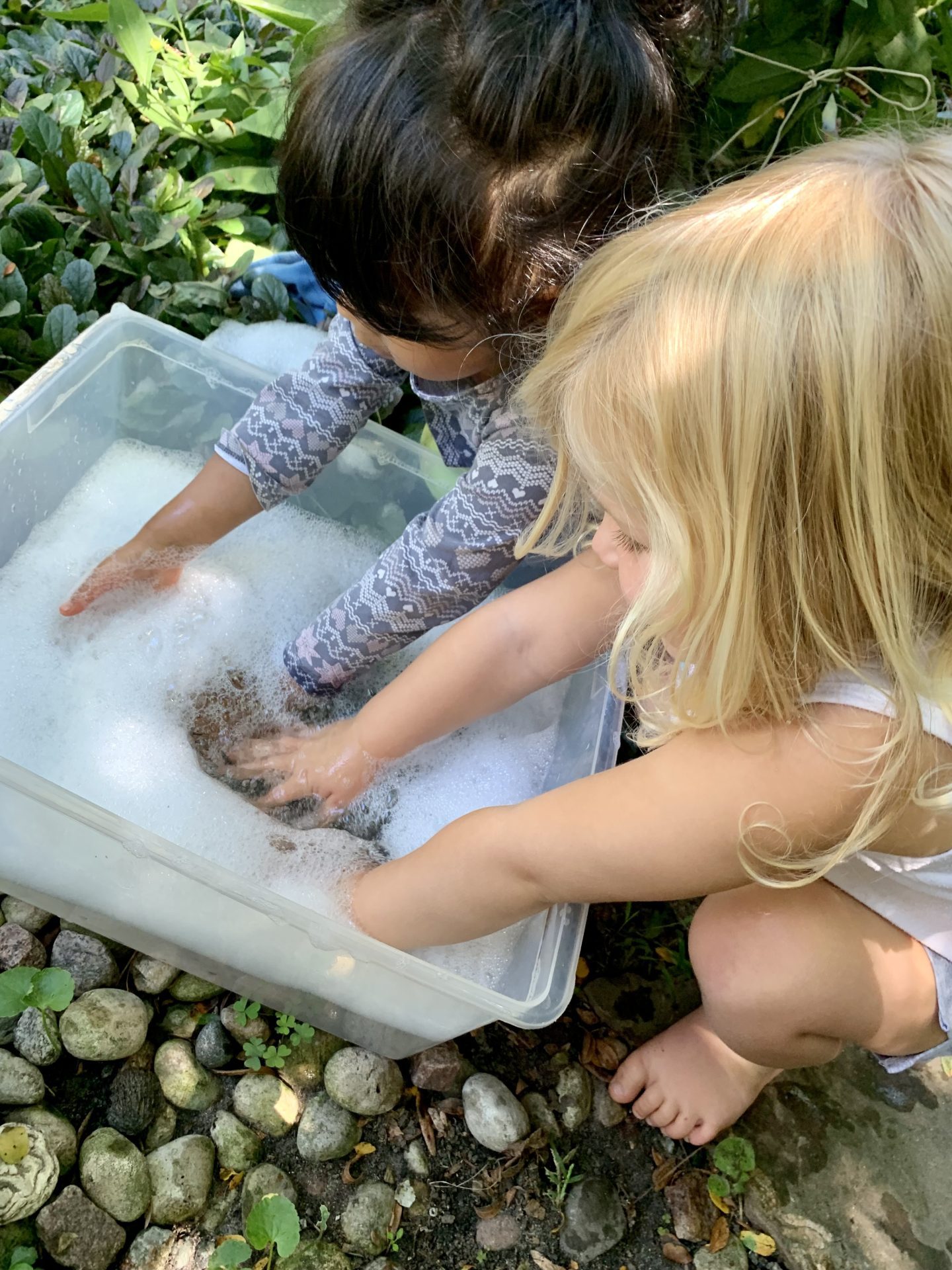
- Prepare the Water Station or Bath Fill your tub or bucket with warm water.
Add a small squirt of soap and mix with your hands to make bubbles. - Explore and Play! Invite your child to scoop, pour, stir, and splash.
- Add the Toys Encourage your child to guess what will sink and what will float — then test their ideas!
- Make More Bubbles Try different ways to make bubbles: Wiggle hands under the water. Blow gently through a funnel or straw. Squeeze a turkey baster or plastic bottle underwater
When children play with bubbles, they’re doing much more than having fun. They’re learning to think like little scientists—asking questions, making guesses, and watching what happens next. As they play, they hear and use new words like float, sink, and pour, which helps build their language and confidence. All that scooping, squeezing, and stirring also helps make their hands and fingers stronger for drawing and writing later on. Most of all, bubble play gives families a calm, happy way to connect at the end of a busy day while children learn through joyful play. You can read more about our bubble adventures over on our Early Science Matters site.