Building Bridges to Outdoor Time
Introduction
Some children believe they “don’t like the outdoors,” but often they just haven’t found a connection that feels comfortable yet. Outdoor time is essential for young children’s physical health, emotional regulation, creativity, and confidence.This activity uses bridge activities to help children feel safe and excited outside by connecting nature to things they already love. By meeting children where their interests are, outdoor time becomes familiar, joyful, and low-pressure. Short, positive experiences help build confidence and curiosity, setting the stage for a lifelong relationship with nature.
Gather Materials
- A favorite toy or stuffed animal (Dinosaur figures, Small Lego guy or Polly Pocket)
- Sketch pad or paper
- Crayons, pencils, or washable markers
- Small basket or bag for collecting treasures
- Camera or phone (optional, for photos)
- Comfortable outdoor clothing
- A blanket or towel for sitting
- Magnifying glass or binoculars
Note: Small parts pose a choking hazard and are not appropriate for children age five or under. Be sure to choose lesson materials that you feel are safe for your child and that you are comfortable letting your child use.
Activity
Step 1: Set the Stage
Choose a time when your child is well-rested and fed. Plan for 15–20 minutes of outdoor time to keep the experience positive and manageable. Let children know their favorite toy or stuffed animal is coming along for the adventure.
Step 2: Follow Their Interests
Invite children to bring something they love and use it as the focus for outdoor exploration:
- Art Lovers: Bring sketch pads outside and draw trees, clouds, rocks, or their toy enjoying nature.
- Readers & Storytellers: Find a cozy sit spot and read a favorite book outdoors or make up a story together.
- Little Scientists: Collect leaves, rocks, or sticks. Use a magnifying glass to observe textures and colors.
- Dinosaur Fans: Go on a “fossil hunt” for special rocks or imagine dinosaur footprints along the path.
- Fairy Tale Fans: Build fairy houses or gnome homes using natural materials like leaves and twigs.
Step 3: Comfort and Connection
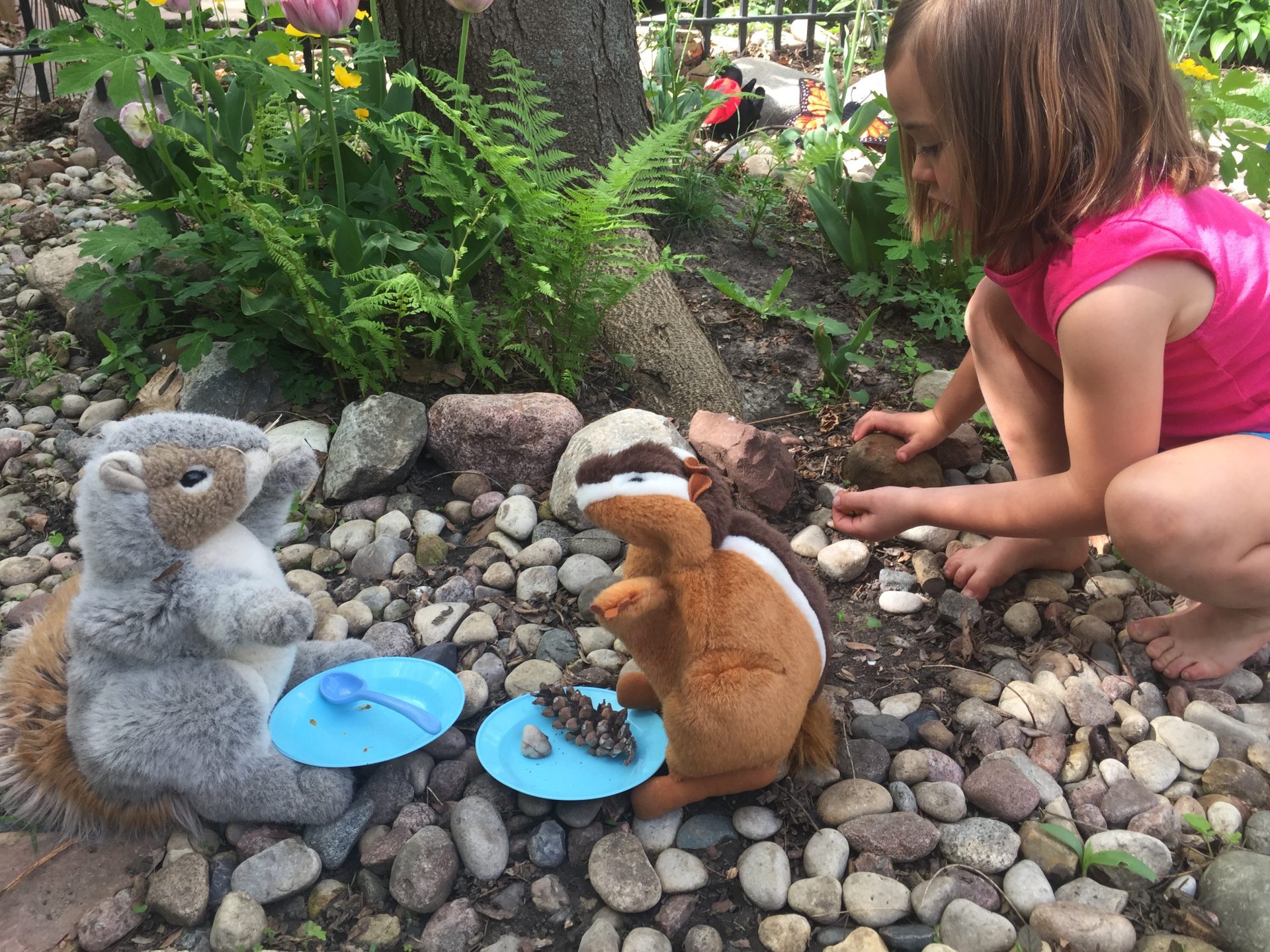
Allow your child to keep their comfort object close. This provides emotional security and helps new outdoor experiences feel safe and familiar.
Step 4: Bonus Fun – Photo Adventure
Take photos of the stuffed animal or toy “exploring” nature. Pose it on a log, next to flowers, or sitting on a rock. This playful addition often slows the walk down but increases engagement and joy.
Wrap-Up: The 3-3-3 Nature Check-In Before heading back inside, try a simple 3-3-3 check-in, adapted for young children to help them pause, notice, and feel grounded:
- Name 3 things you can see (a tree, a cloud, a bug, your toy)
- Name 3 things you can hear (birds, wind, footsteps, leaves crunching)
- Take 3 slow breaths together, pretending to smell a flower and blow out a candle
Finish by asking what they liked best or what their toy enjoyed most. Keeping this moment calm and positive helps children associate outdoor time with safety, success, and connection. Repeat, repeat, repeat. Taking 10 minutes daily builds on the expectation that we go outdoors to stay healthy.