Cut The Grass
Introduction
This one sounds a little unusual at first—but trust me, kids LOVE it.
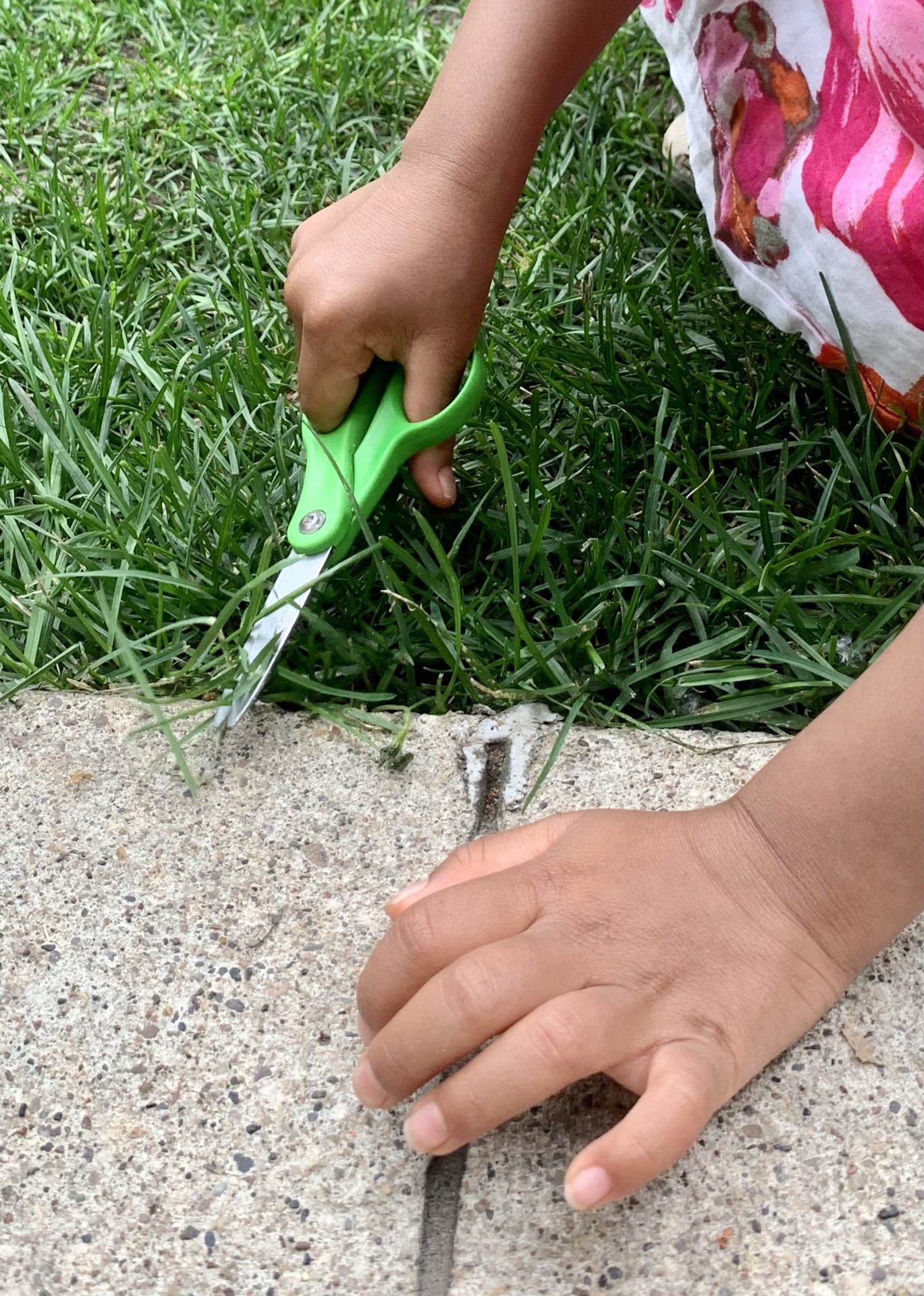
Giving children a pair of child-safe scissors and letting them cut real grass outside is one of those magical activities that looks simple but delivers big results. It’s calming, naturally engaging, and keeps kids focused for long stretches of time. No setup, no mess, and no cleanup—just fresh air, quiet concentration, and hands busy doing meaningful work.While they’re happily giving your lawn a haircut, they’re also building the exact fine‑motor skills they need for writing, drawing, and coloring.
If you’re looking for an easy way to build school readiness skills while your child happily stays engaged, this one’s a winner.
Gather Materials
Grass
Child-safe scissors
Note: Small parts pose a choking hazard and are not appropriate for children age five or under. Be sure to choose lesson materials that you feel are safe for your child and that you are comfortable letting your child use.
Activity
- Head outside.
Find a safe spot with grass and let your child know they have an important job: “The grass is getting long—can you help trim it?” - Show your child how to hold the scissors.
Learning to hold scissors the right way—fingers on the bottom and thumb on top—makes cutting easier and safer for children. A good grip helps them control the scissors without getting tired or frustrated, and it builds the hand strength they’ll need later for writing, coloring, and other classroom tasks. Using a playful chant keeps it fun and pressure-free while helping the skill stick.
“Fingers on the bottom and the thumb on top,
open and shut them—chop, chop, chop!” - Let them cut.
Invite your child to snip the tops of the grass. They can cut a little, a lot, fast, or slow. This activity naturally adjusts to their skill level. - Step back and watch the magic.
Many kids will settle into deep focus, carefully cutting blade after blade. It’s repetitive, purposeful, and incredibly regulating.
While it may look like your child is just cutting grass, this activity strengthens fine motor muscles, builds hand-eye coordination, and encourages focus and attention. Because it’s calm and repetitive, many children naturally slow down, concentrate, and stick with the task—skills that help them feel confident and ready in a classroom setting.