Mirror Magic
Introduction
Do you ever wish someone had shown you how to understand your feelings, get along with others, or make friends when you were little? That’s exactly what social and emotional learning (SEL for short) is all about. Researchers are finding that helping kids develop these skills early makes a big difference. Children who practice SEL not only do better in school, but they also build confidence and learn ideas that help them handle life’s ups and downs. Mirror play is a simple and fun way for children to practice important social and emotional skills. By watching themselves and each other, kids learn to recognize and name different emotions, which helps them understand their own feelings and the feelings of others. It also gives them a safe space to express themselves, build confidence, and practice empathy. Just a few minutes of mirror play each day can strengthen these foundational skills while giving you both a chance to connect, laugh, and enjoy some screen-free time together.
Gather Materials
- A large, safe mirror (wall-mounted or full-length works best)
- A little open space to move and make faces
- Optional: stuffed animals or puppets for extra storytelling fun
Note: Small parts pose a choking hazard and are not appropriate for children age five or under. Be sure to choose lesson materials that you feel are safe for your child and that you are comfortable letting your child use.
Activity
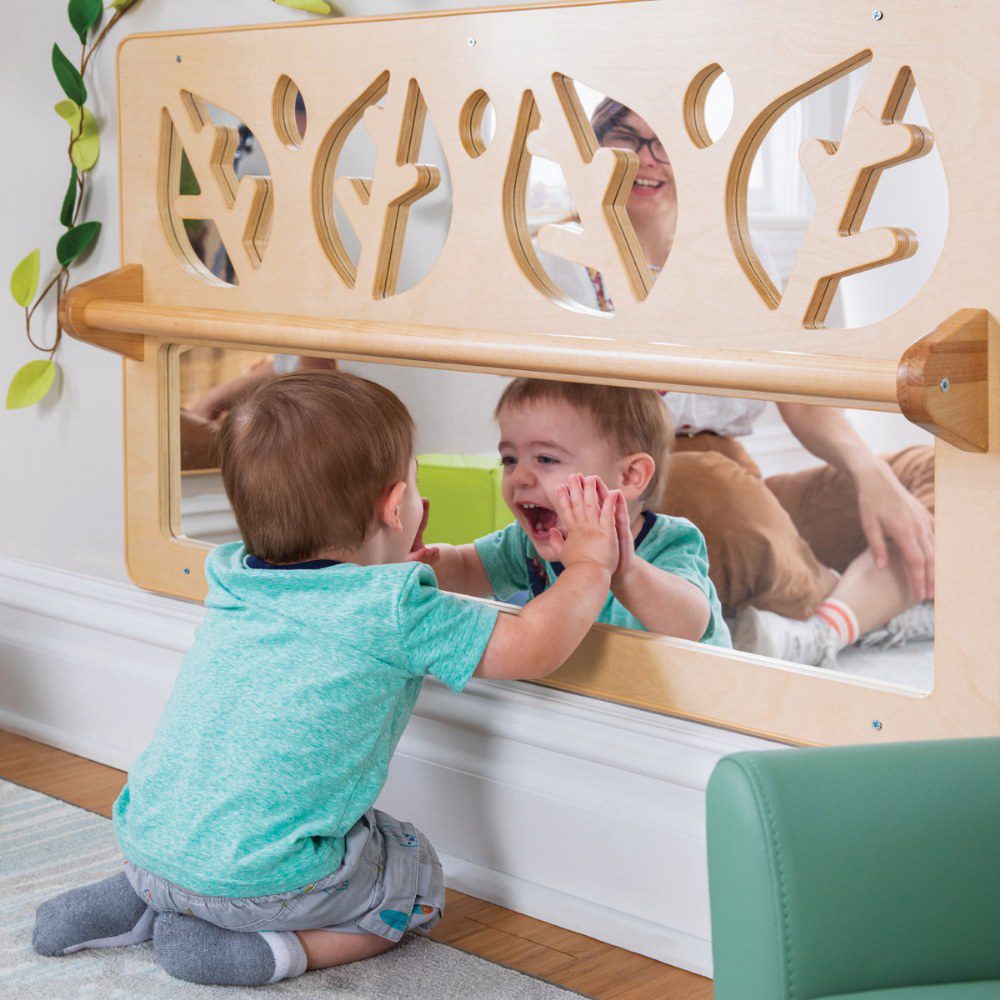
- Stand in front of the mirror with your child and start making faces—happy, surprised, silly, or curious. Encourage your child to copy you, and then switch! Name each emotion as you go: "Look, I’m making a happy face! Can you make a happy face too?" Take turns making different expressions and guessing each other’s emotions. This helps children start noticing how feelings show up on faces. "Hmm, that looks like you might be feeling excited! Am I right?"
- Storytime in the Mirror. Use a stuffed animal or puppet to act out a short story. Encourage your child to show how the character feels at different points. You can also let your child lead the story—it’s amazing to watch their imagination and empathy grow!
- After a few minutes of play, pause and ask questions like: “Which face was your favorite to make?” “Can you show me a face that matches how you feel right now?” This helps children name emotions and reflect on how they’re feeling—an important part of SEL.
- Mirror play is also a perfect opportunity to introduce simple social interactions. While making faces or acting out stories, you can practice phrases that help children connect with others, such as “Hi, my name is [child’s name]. What’s your name?” or “Would you like to play with me?” You can role-play these interactions using a puppet, stuffed animal, or even yourself in the mirror. Saying the words out loud while making eye contact with their reflection gives your child a safe, playful way to practice confidence, greetings, and starting conversations. Celebrate every attempt, because even small efforts help build important social skills.