Move & Groove: A Screen-Free Dance Party
Introduction
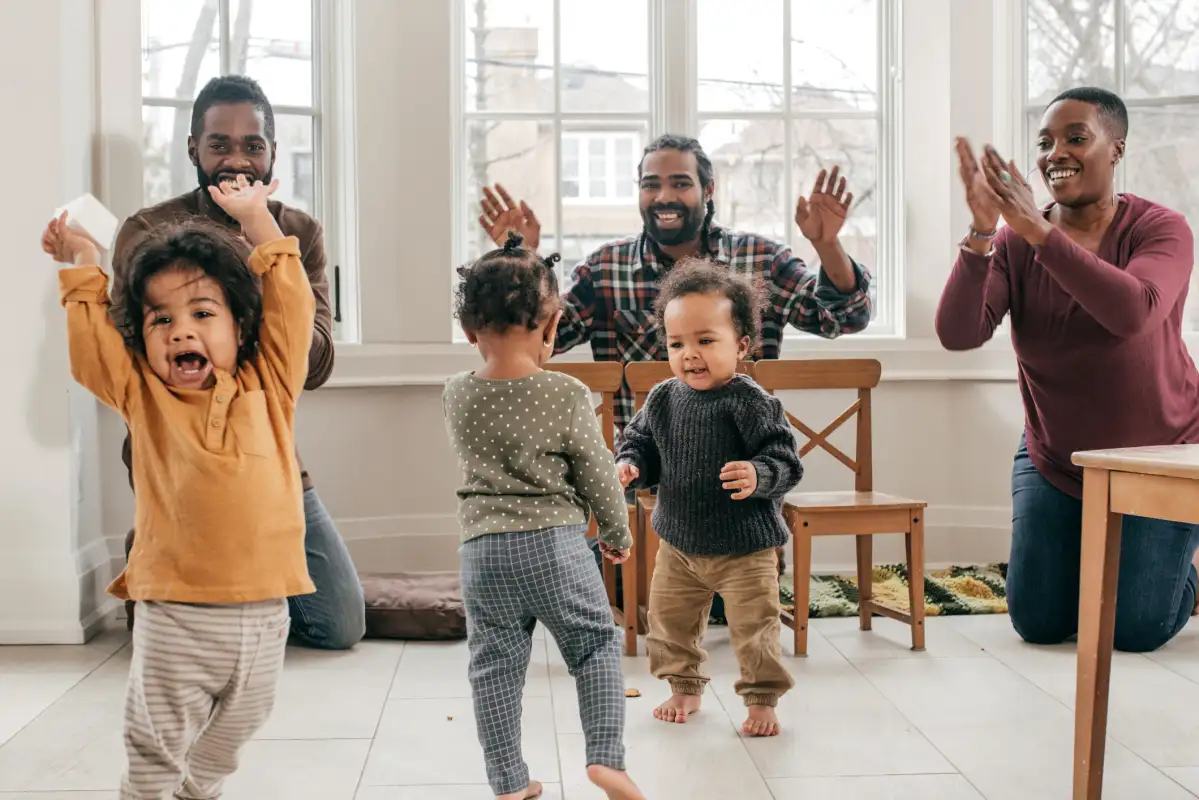
An at-home dance party is an easy, screen-free activity that supports your child’s development while still feeling fun and exciting. Music naturally invites children to move, listen, and express themselves. With just a little space and a playful attitudet, you can turn everyday moments into meaningful learning experiences that build school readiness, strengthen growing bodies, and create positive family connections.
Gather Materials
Music (from a speaker, radio, or your own singing)
Open space to move safely
Optional and not necessary, but always a popular choice
- Scarves, ribbons, or streamers
- Shakers, pots, or homemade instruments
- Stuffed animals or props for dancing
Note: Small parts pose a choking hazard and are not appropriate for children age five or under. Be sure to choose lesson materials that you feel are safe for your child and that you are comfortable letting your child use.
Activity
- Set the Stage
Clear a small area in your living room or bedroom and let your child know it’s time for a dance party. Invite them to help choose a song or type of music. Giving them a choice builds excitement and independence, and encourages their participation. - Start Moving
Turn on the music and begin with simple movements like clapping, marching, or swaying. Encourage your child to copy you, then switch roles and copy their movements. This back-and-forth builds attention, imitation skills, and confidence. - Explore Different Movements
As the music plays, invite your child to jump, spin, reach, crawl, or freeze when the music stops. You can ask playful questions like, “Can you dance like an animal?” or “How would your body move to a slow song?” - Add Props (Optional)
Introduce scarves, shakers, or stuffed animals to make the experience even more engaging. These tools help support fine motor skills and sensory exploration while keeping the activity fresh. - Wind Down
End the dance party with a slower song. Stretch, sway gently, or take deep breaths together. This helps your child transition from high energy to calm and supports emotional regulation which they will need in school.