Playground Power
Introduction
Before children can sit on the carpet, follow directions, or hold a pencil at a desk, their bodies and senses need to be ready. Two of the most important senses for learning are proprioception—our body’s sense of where our arms, legs, and whole body are—and the vestibular system, which helps us balance and coordinate movement. When these senses are well-developed, children can sit still, move confidently, and focus on learning.
The best way to build these skills isn’t at a desk—it’s outside, on the playground! Climbing, swinging, jumping, and running aren’t just fun—they help children strengthen muscles, develop balance, and get their brains ready to learn.
Gather Materials
Note: Small parts pose a choking hazard and are not appropriate for children age five or under. Be sure to choose lesson materials that you feel are safe for your child and that you are comfortable letting your child use.
Activity
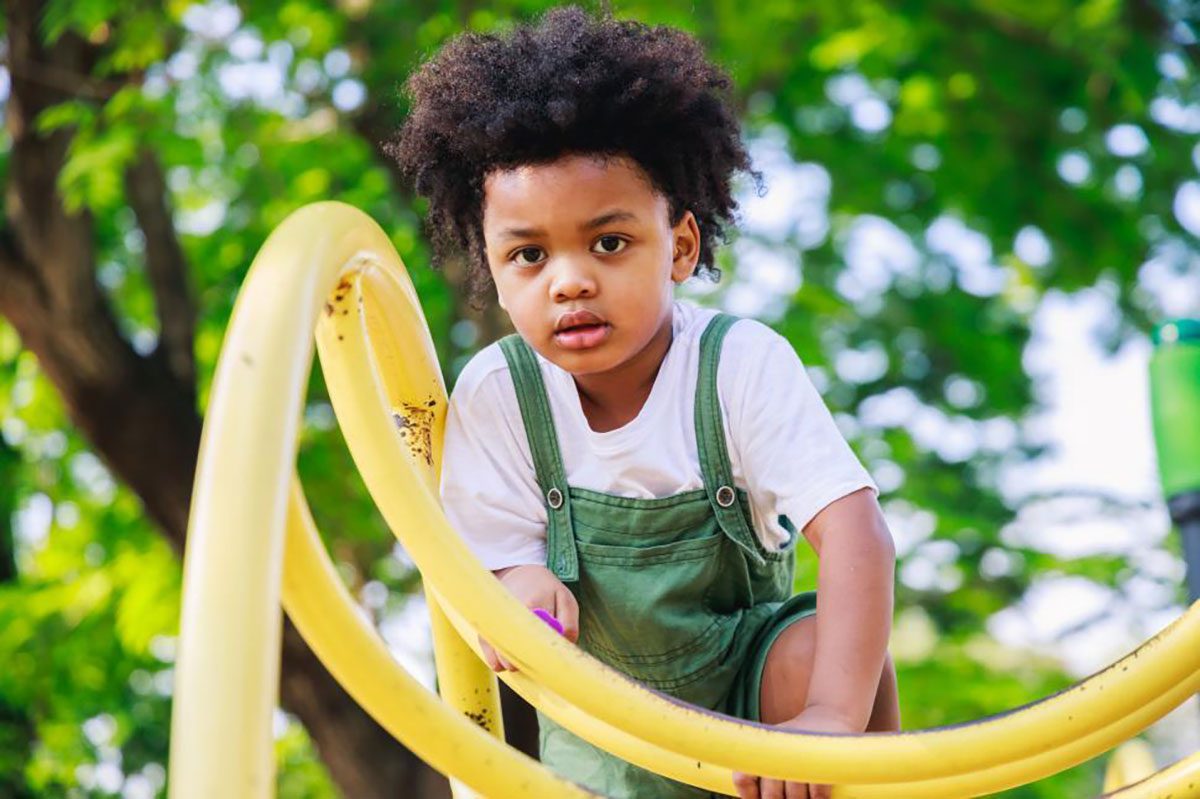
- Climbing ladders strengthens core muscles and helps your child know where their body is in space (proprioception).
- Swinging back and forth builds core strength, balance, and coordination (vestibular system) and can help children feel calm and focused.
- Hang from bars, monkey bars or fireman poles strengthens arms, shoulders, and their core. These skills are needed for writing, cutting, and climbing safely.
- Balancing on teeter-totters or narrow bridges helps children develop balance, coordination, and focus while learning to control their bodies.
- Crossing bridges or climbing nets encourage crossing the midline (moving one side of the body across to the other), which is important for reading, writing, and coordinated movement.
- Climbing up and down slides strengthens the core and leg muscles, helping children move confidently in space, and sit confidently in their chair.
- Spinning on merry-go-rounds or spinning equipment trains the body for balance and spatial awareness, while being a fun way to build focus and body control.
- Jumping, running, and skipping are big movements that improve coordination, body awareness, and self-control.
- Carrying buckets, pushing or pulling object supports proprioception, teaching your child how much force to use when writing or playing tag.
- Playing with balls: throwing, catching, or kicking builds hand-eye coordination and strengthens small muscles in hands and wrists, which supports writing.
Every climb, swing, jump, and throw helps your child build strong bodies, calm minds, and ready-to-learn brains. Outdoor play isn’t just fun—it’s the ultimate preparation for kindergarten. So head outside, explore, and play!
If you'd like to join us on our Early Science Matters page, we will share the scientific discoveries learned by a young group of friends at the playground!