Ready, Set, Write!
Introduction
Your child is growing fast, and you might be feeling the urge (or even the pressure!) to help them learn how to write their name. It’s such an exciting milestone, and it will happen—but before your child can master letters and pencil strokes, their body needs to be ready. Writing isn’t just about paper and pencils; it’s about strong bodies, steady hands, and coordinated movements. Before children can master a pencil, they must first master their bodies. Writing develops from the inside out—starting with strength and control in the core and the center of our bodies, then moving through the arms and hands, and finally to the fingertips. Moving lays the groundwork every step of the way. And here’s the fun part: these important skills don’t come from worksheets—they grow through active, hands-on play!
Gather Materials
Note: Small parts pose a choking hazard and are not appropriate for children age five or under. Be sure to choose lesson materials that you feel are safe for your child and that you are comfortable letting your child use.
Activity
Believe it or not, writing starts with the core! Those muscles in the tummy, back, and shoulders do more than help kids climb, jump, and wiggle—they also help them sit upright and stay focused. A strong core gives a child the stability they need to control their arms and hands. If a child’s body isn’t steady, you might notice them leaning on one arm just to stay balanced. That makes it harder to use both hands for writing or cutting, and they may tire out more quickly.
To help build those muscles, think movement and fun! Build core strength through everyday play—running, jumping, climbing, swinging, and rolling around on the floor all count. Even simple activities like dancing to their favorite songs or playing tag in the yard build those essential muscles.
Don’t forget about tummy time, even for preschoolers! Crawling games like the bear crawl, crab walk, inchworm, or army crawl are fantastic ways to build coordination, core strength, and shoulder stability. Turn them into races or obstacle courses for even more fun.
Balance games are another winner. Try “Red Light, Green Light,” standing on one foot, hopping across pillows, or walking along a chalk line. These playful challenges strengthen balance and posture—key ingredients for better hand control and focus when it’s time to sit and write.
Once your child’s core is strong and steady, they’re ready to develop fine motor skills—those small but mighty muscles in their hands and fingers. Fine motor control helps your child hold a pencil comfortably and to use it with precision. Strong fingers mean they can grip a pencil without squeezing too tightly or tiring out quickly.
But it’s not just about strength—eyes and hands need to work together, too! Good hand-eye coordination helps kids place their pencil exactly where they want it, whether they’re drawing a line, tracing a shape, or eventually writing their name.
Fine motor skills grow through play—the kind that’s colorful, creative, and sometimes a little messy!
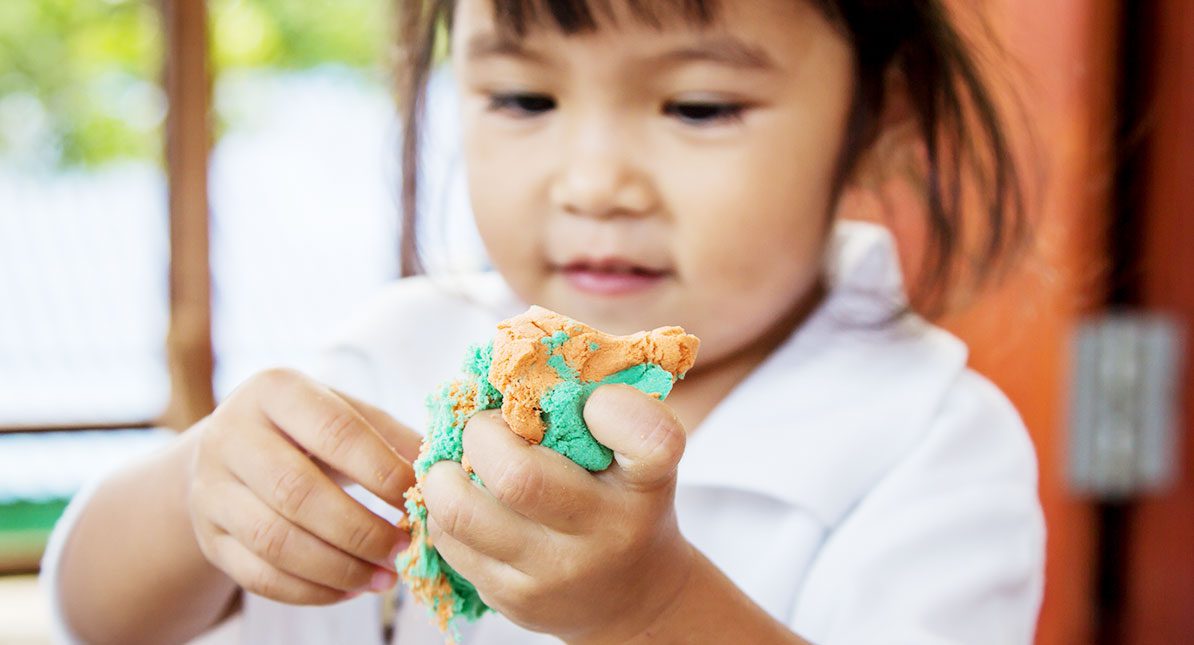
- Play with Play-Doh or clay: Rolling, squishing, and shaping builds strong fingers.
- Use tongs or tweezers: Pick up pom-poms, cotton balls, or cereal pieces to strengthen grip and control.
- String beads: Boosts focus, coordination, and patience.
- Peel stickers: Excellent for building precise finger movements.
- Write on vertical surfaces: Try chalkboards, easels, or paper taped to the wall or fridge—this naturally encourages better wrist movement and shoulder strength.
Invite your child to help around the house, too. Wiping tables, sweeping, stirring ingredients, pouring water, or even folding washcloths all support coordination and control. Every time your child helps, they’re not only learning life skills—they’re preparing their hands and mind for writing success.
Writing readiness isn’t a race—it’s a joyful journey of movement, play, and discovery. Every hop, crawl, and squish of play dough is one step closer to holding that pencil with confidence. Keep it fun, keep it playful, and trust the process—your child’s strong, capable hands will be ready before you know it!
If you'd like to read more about the benefits and set up of clay, be sure to check out our blog over on our sister site, Early Math Counts