Think Outside the Box
Introduction
When children engage in pretend play, they aren’t just having fun, they are actively exercising their brains. By allowing children to explore, create, and play freely with simple objects like a cardboard box, you’re helping to strengthen their problem-solving, planning, and flexible thinking skills. Even simple pretend play with everyday objects—like turning a box into a rocket or a castle—gives kids a fun way to practice these brain skills. The more they play creatively, the stronger their planning, decision-making, and thinking skills become—skills that help them in school and in life. This type of play also gives children opportunities to rehearse real-world scenarios, build resilience, and improve social skills—all while having a blast! Encourage your child to think outside the box (literally!) as they dive into this fun and educational activity.
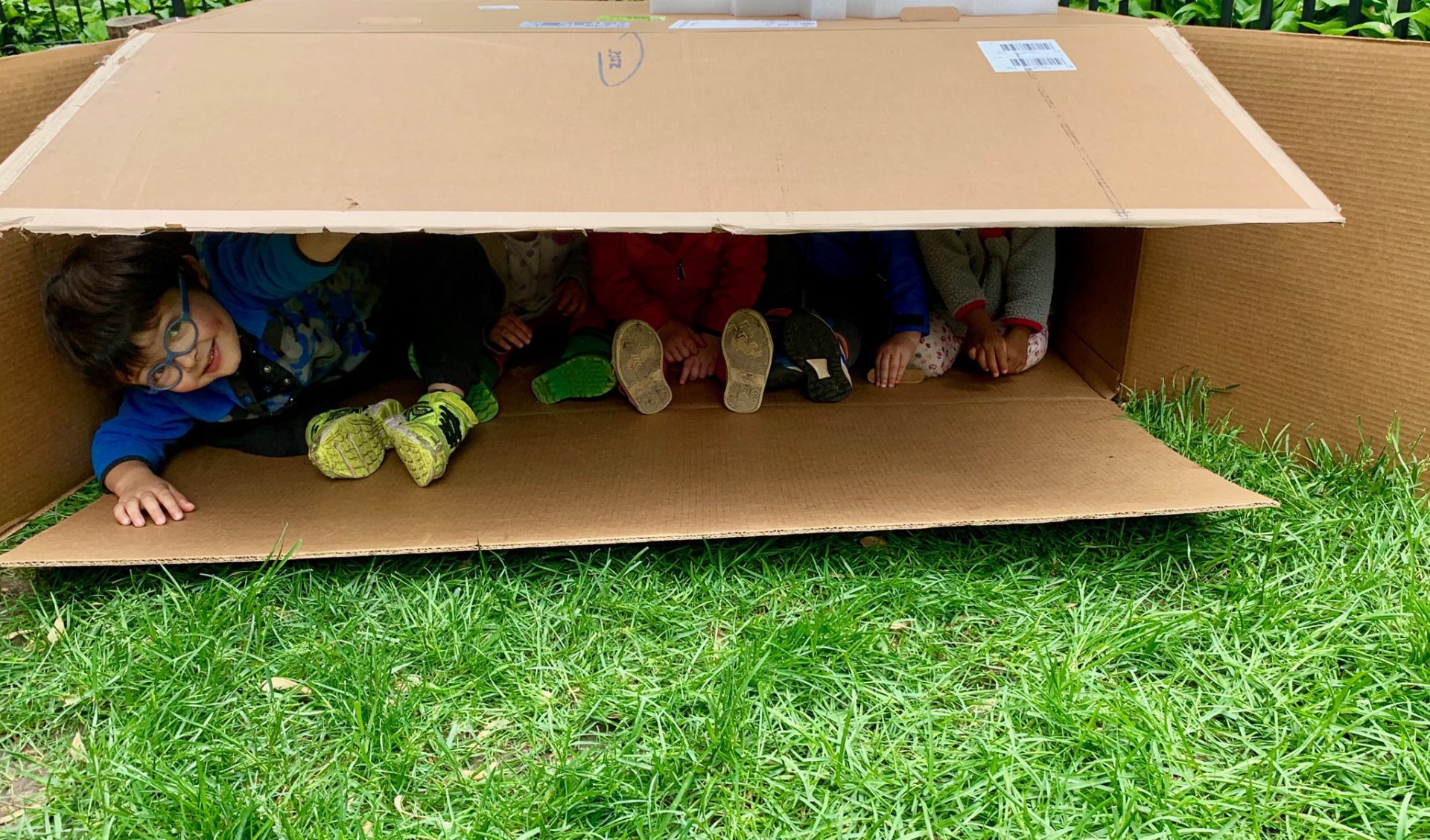
Gather Materials
- A large cardboard box (any size that allows for some creativity and movement)
- Markers, crayons, stickers (optional, for decorating the box)
- Scissors (for adult use)
- Imagination!
Note: Small parts pose a choking hazard and are not appropriate for children age five or under. Be sure to choose lesson materials that you feel are safe for your child and that you are comfortable letting your child use.
Activity
- Preparation: Start by giving your child a large, empty cardboard box. Encourage them to think of it as a blank canvas and ask what they could make. Could it be a house, spaceship, car, or even a secret cave?
- Building and Creating: Let the child decide what to create and how to decorate or transform the box. Offer craft supplies like markers or stickers to enhance the creative process.
- Play and Test: Once the box is transformed into something exciting, it’s time to play! Ask questions like, “How does it work?” or “Where does it take you?” to spark further imagination. Allow your child to explore and test their creation—whether it's pretending to go on an adventure or transforming the box into something new along the way.
To learn more about the benefits of box play and how it nurtures early science and engineering skills, we invite you to visit our Small Box, Big Ideas blog at Early Science Matters.