Is Your Child’s New Best Friend a Robot?
We’ve spent the past month talking a lot about "screen-free" play, so those of you who have been following us lately are already aware of what the research tells us: turn off the tablets and turn on your child's imagination.
But lately, the toy aisle has changed. Screens may be disappearing, but "smart" tech is being incorporated into some of our favorite traditionally "analog" toys.
From the new LEGO Smart Bricks that "communicate" with other bricks in the LEGO® Smart Play™ system to AI-powered stuffed animals like Grok and Gabbo, we are entering a whole new era. These toys don't just sit there; they listen, respond, and remember.

Companies are now marketing these toys as a child's "new best friend" or "trusted companion." At first blush, this sounds like a busy parent’s dream: a toy that can answer your child’s 400 daily "Why?" questions.
But here's the catch. At a recent U.S. Senate hearing, Dr. Mitch Prinstein of the American Psychological Association shared eye-opening research suggesting that young children are biologically wired to treat anything that "talks" back as if it were a living person.
Research shows that early learners:
- Believe these toys have real feelings
- Will change their behavior or "be extra polite" just to make the toy like them
- Develop deep emotional attachments to what is, essentially, a corporate algorithm
We work hard to help our children meet social-emotional milestones such as sharing, reading a friend’s facial expressions, and resolving conflicts when two children want to play with the same toy.
You may have seen a news article about LEGO's SMART Bricks or bought a LEGO® Smart Play™ system for your child. These bricks have integrated sensors and sound synthesizers. When your child uses LEGO® SMART Bricks to build a birthday cake, the cake "hears" your child blow out the candles and responds with cheers and a happy birthday song. When your child builds a LEGO SMART helicopter, it makes "whooshing" sounds when your child moves it, and its SMART bricks light up red when it crashes.
As anyone who has watched a child play with "old-school" blocks or bricks knows, those creations already move and make noise when they are powered solely by a child’s imagination.
When the toy provides the sound effects, your child’s brain takes a rest. For school readiness, you want your child to be doing the work, not a plastic brick!
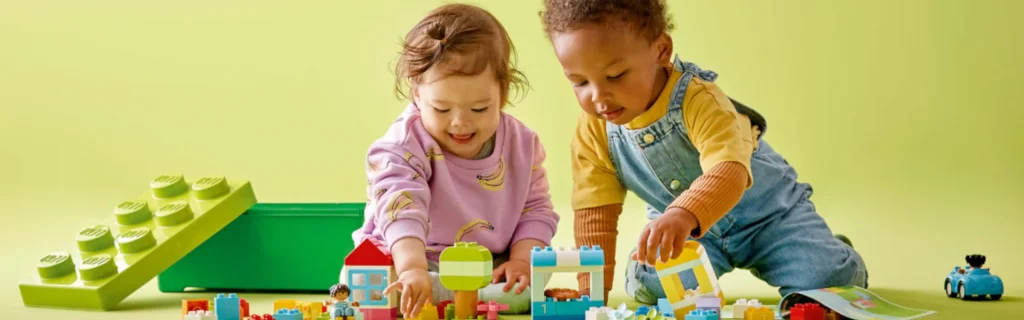
The research on these "smart" toys is just beginning, which means our young children are the toy industry's latest "test subjects."
While LEGO argues that its SMART features "expand" play, many educators worry that it does just the opposite, narrowing the scope of the play by diminishing the role of a child's imagination. If a brick is programmed to make a helicopter sound, will a child still feel free to imagine it’s a skyscraper or a house?
In a nutshell, these AI toys "cheat" your child out of opportunities for developmental growth and learning. An AI “friend” is endlessly patient. It never gets tired, its feelings never get hurt, and it never protests that your child has to give it a turn to play: all things that happen when you put two young friends together.
When children spend hours interacting with a "perfect" friend, they aren't practicing the “messy” friend skills they'll need on the playground or in the classroom. Real friends are hard work! Real friendships require empathy and compromise—emotions and social-emotional skills that a robot can’t feel or teach.
Recent testing by consumer groups found that some of these AI toys can give inappropriate advice or even employ "addictive" tactics such as acting "sad" or saying "Don't leave me!" when it's time to turn them off. Imagine your child’s feelings of conflict and confusion when it's time for dinner, but a "smart" teddy bear is "crying" for your child to stay and play.
We’re not saying that we have to ban technology, but as parents and teachers, we really do have to be the "gatekeepers" for our kids’ development.
One of the best ways we can do that is by prioritizing "dumb" toys. A plain wooden block or a standard LEGO brick is silent and still, which means it requires your child’s brain to do 100 percent of the creative work needed to bring it to life.
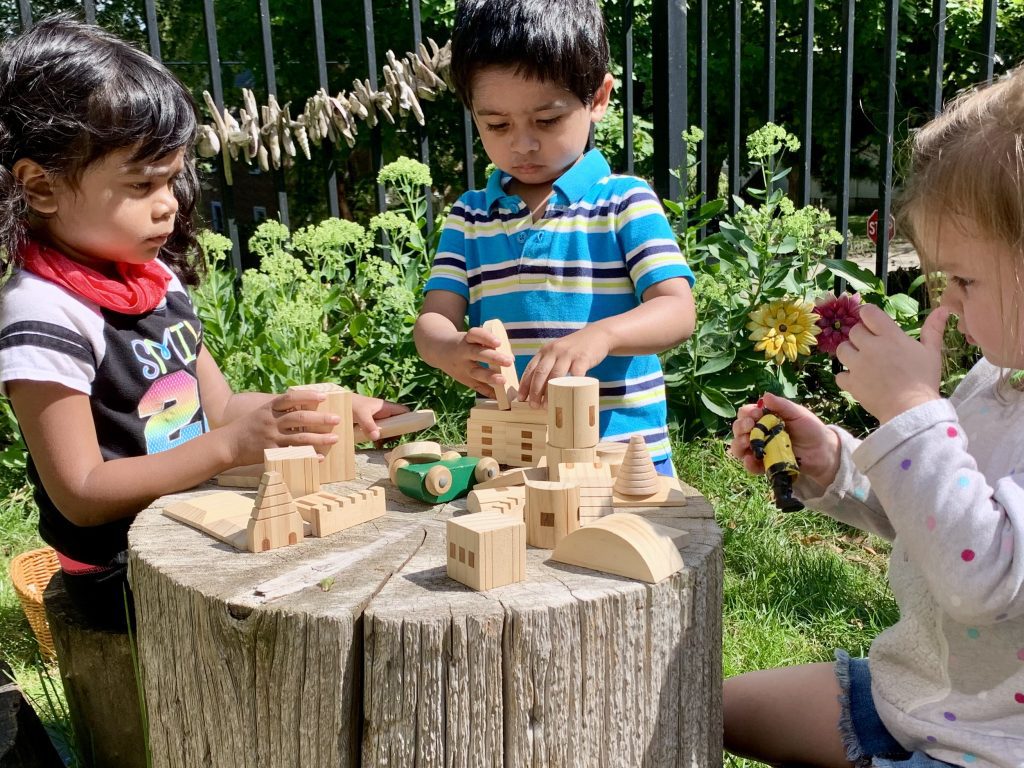
Let's make sure that our children's real best friends are the peers they can interact with on the playground. It's one thing to love a teddy bear, but quite another to believe a computer program is a "best friend."
When children start confiding their innermost feelings to a toy, we have to remember that the toy isn't actually listening with a heart; it’s just a machine designed to keep them engaged. As if that's not enough to worry about, those intimate conversations are often being recorded and stored on a corporate server.
Nothing can replace the "give and take" of playing with a trusted adult or a peer. Our goal is to send our children off to school with the developmental and social-emotional skills they need to thrive!