The Power of a Living-Room Dance Party
If you’ve ever felt like screen time is a constant tug-of-war in your house, you're not alone. For many families, the prospect of negotiating with children to put down a tablet or turn off the TV can feel overwhelming, especially after a long day.
That's because screens are engaging, fast-paced, and very good at holding a child’s attention. The tricky part is finding a different activity that feels just as fun and exciting, without relying on technology.
But here's the good news: If you want to skip the pleading, groaning, bargaining, and full-on tantrums that your child resorts to every time you set a screen-time limit, you'll be delighted to know that there's a wonderfully simple solution: music and movement!
At-home dance parties are one of the easiest, happiest, and most powerful school readiness activities you can offer your child. They're a big part of our screen-free movement approach because they support growing brains and bodies at the same time, all while feeling like play.
Music has a special way of pulling children in. It sparks joy, captures attention, and invites them to move, sing, and express themselves naturally.
All you need is a song, some space, and a willingness to be silly together.
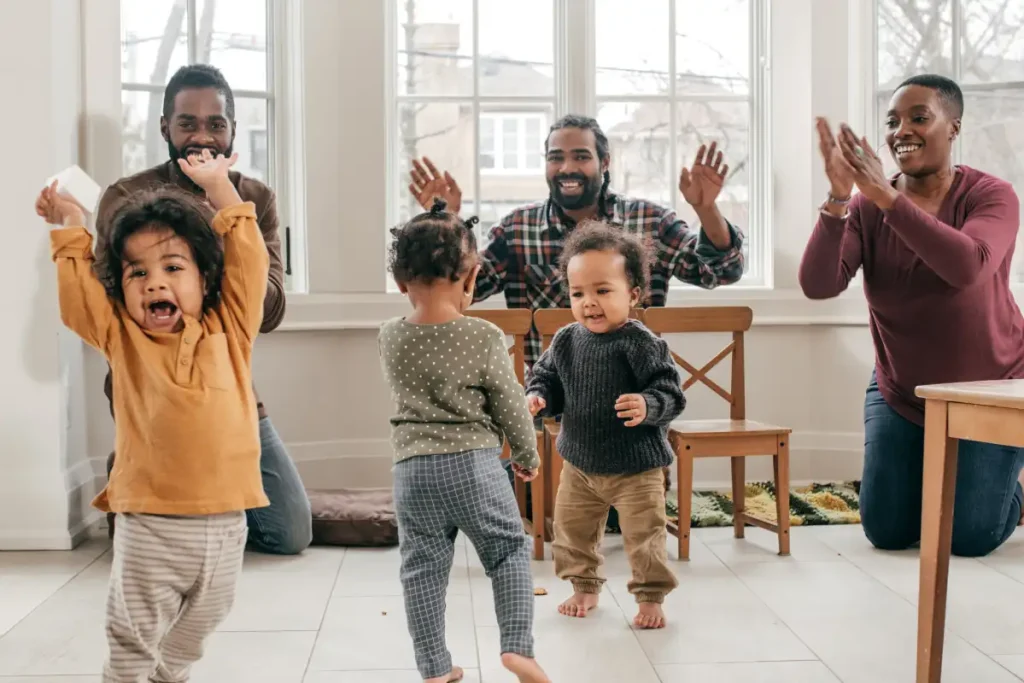
During the early years, a child's brain grows and develops at an astonishing rate. A quarter of the size of an adult brain at birth, it doubles in size during the first year of life, reaches 80–85% of its adult size by age three, and is 90% developed by the age of five.
During this period of rapid brain development, many of the neural connections that children need to talk, learn, and manage their emotions are being built.
Movement paired with music helps strengthen these connections. When children clap, jump, spin, freeze, and dance to a beat, they are using memory, attention, listening skills, and problem-solving—all at once. This "whole-body learning" supports cognitive development in a way that screens simply cannot.
Dance parties are amazing for motor development. When children hop, march, twirl, crawl, or reach during a song, they are building gross-motor skills that lay the foundation for balance, coordination, and body awareness. These large muscle movements are essential for everyday activities like running, climbing, and even sitting upright at a table.
At the same time, movements like clapping, shaking instruments, or using finger motions in songs help children develop fine motor skills, which prepare them for future school activities such as cutting, drawing, and writing.
For children with developmental delays, these playful movement opportunities are especially valuable and provide much-needed practice in a joyful way.
Songs also introduce new words, patterns, and rhythms of speech. Repetition in music helps children remember language and practice pronunciation in a low-pressure way.
For children who are not as verbal as their friends, music offers other ways to communicate through movement, facial expressions, and gestures. As children dance, copy body movements, and respond to musical cues, they learn to express themselves and connect with others in nonverbal ways.
Music and movement can also create a safe space for children to explore, express, and manage their emotions. Dance parties give children an outlet for big emotions such as excitement, frustration, or joy. By moving their bodies, they can release pent-up energy and regulate those big feelings. You may have noticed how a calm song can help your child settle down or how a happy tune can instantly brighten a glum mood.
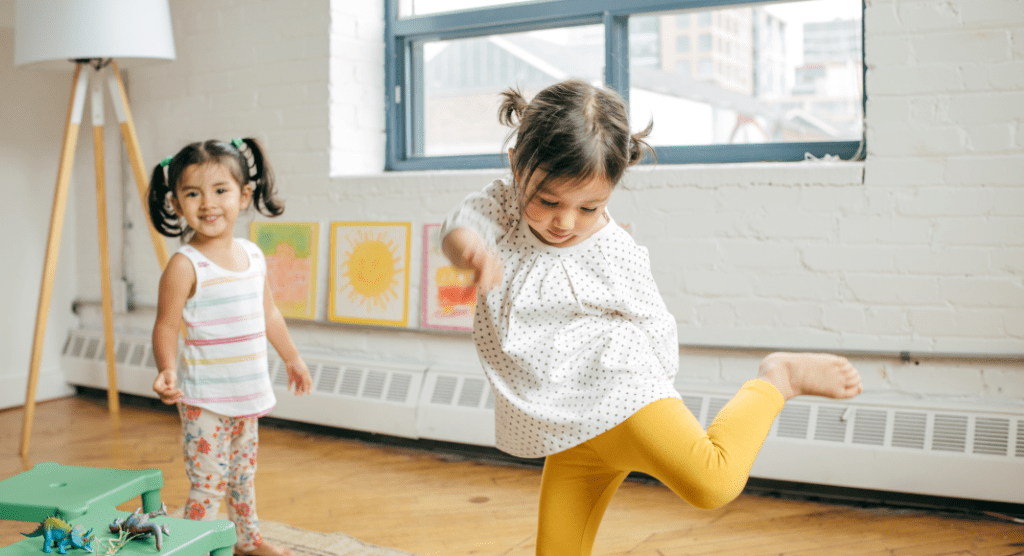
Music helps young children develop social skills—even at home. When children take turns choosing songs, copy each other’s dance moves, or dance with family members, they learn about cooperation, attention, and shared joy.
These interactions build confidence while forging connections, helping little ones learn how to be part of a group in a way that feels natural and fun.
This sensory-rich activity strengthens brain pathways and supports sensory processing. By coordinating hand and foot movements, moving through space, and following a rhythm, children can gain a greater understanding of their bodies and how they relate to the world around them.
When setting limits on screen time becomes a battle of wills, remember that something as simple as music and movement can offer a powerful incentive for your child to leave the virtual world behind for a real-life dance party.
So find a happy tune, pump up the volume, and help your child grow and learn in a joyful, screen-free way!