Your Child is Loving Math!
When many of us hear the word math, we picture worksheets, memorization, and maybe even a little anxiety!
But for young children, math is something they experience all day long. Math is patterns, sizes, weight, and shapes. It's counting out a dozen eggs, comparing shoes at the door, noticing who has more snacks, or lining up cars just because it feels right.
And the best part? It’s fun. Really!
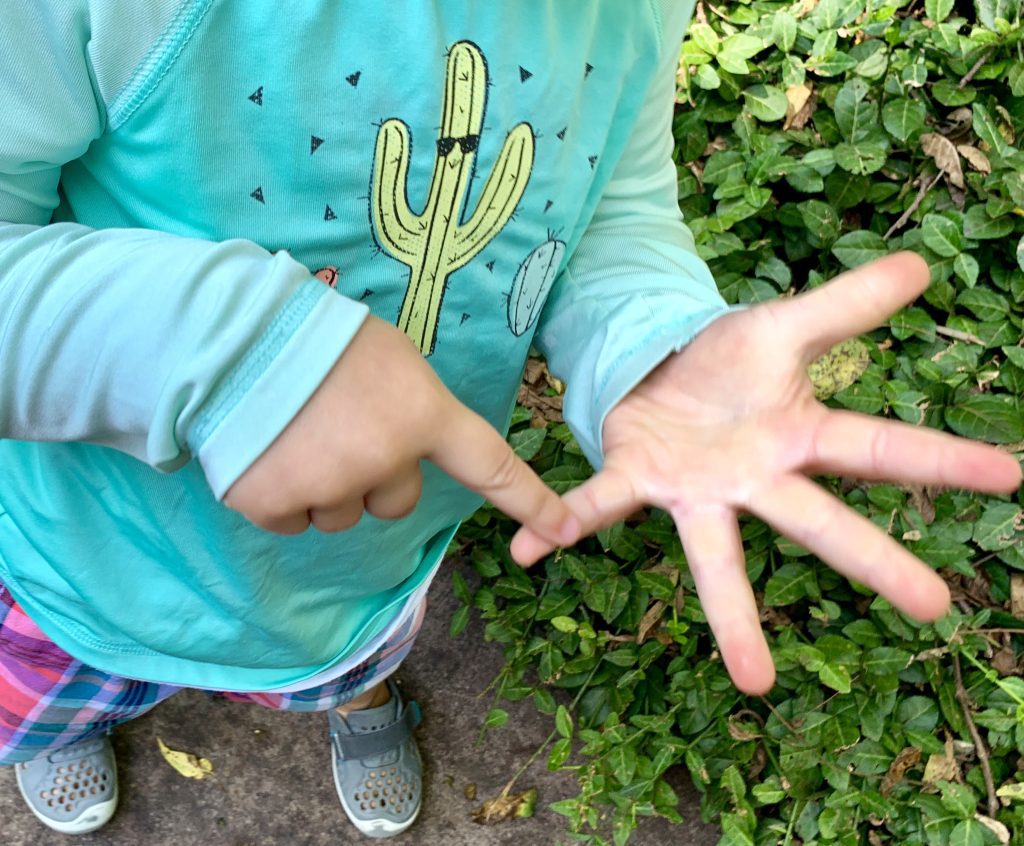
You’ll often hear teachers use phrases such as number sense, counting, and cardinality—and these math terms can feel a little intimidating.
But here's the good news: These are just fancy words for things your child is already doing every day. So let's take the anxiety out of teaching your child early math by breaking down some of the most commonly used math terms:
- Number sense is really just a way of saying how comfortable your child is with numbers. It’s not about knowing all the numbers or saying them perfectly. It’s about noticing amounts. You’ll see number sense when your child knows which pile of snacks is bigger, realizes a shoe is missing, or says, “That’s a lot!” without counting. It’s that gut feeling of “how many” that develops over time through everyday experiences.
- Counting is more than saying numbers like a song. A lot of children can rattle off “One, two, three . . . ” and that’s great. But real counting happens when children connect each number to something real. You’ll see this when children touch each block as they count the blocks in a set, hand out one cookie to each person, or count each step as they climb the stairs. They’re learning that each number matches one thing.
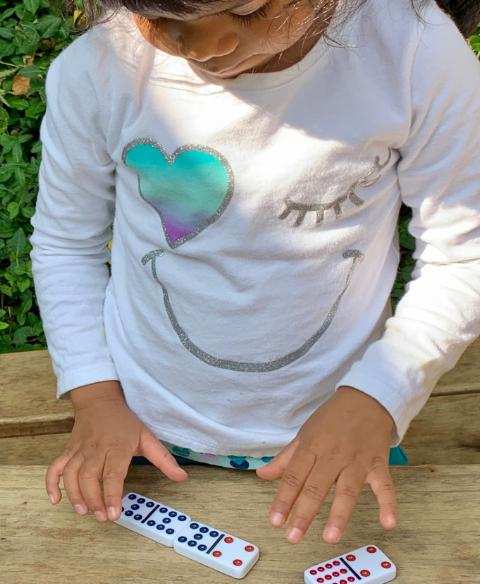
- Cardinality may sound complicated, but it’s actually a simple concept. When children understand that the last number they say is the total amount, that's cardinality. So if they count their toys and say “One, two, three, four,” and then proudly announce, “I have four," that’s cardinality. You'll know their grasp of cardinality is growing when they add one more and say, “Now I have five,” without starting over.
- Algebra starts much earlier than most people realize, but for early learners, it has nothing to do with equations. It’s all about sorting, grouping, and noticing patterns. When children line up toys by color or size, they’re classifying. When they create a red-blue-red-blue pattern with blocks, they’re exploring patterning. Children also learn algebra through their daily routines. When children know that pajamas come after bath time or that shoes go on after socks, they’re recognizing predictable sequences. These simple experiences help children make sense of the world and build logical thinking skills that lay the foundation for later learning.
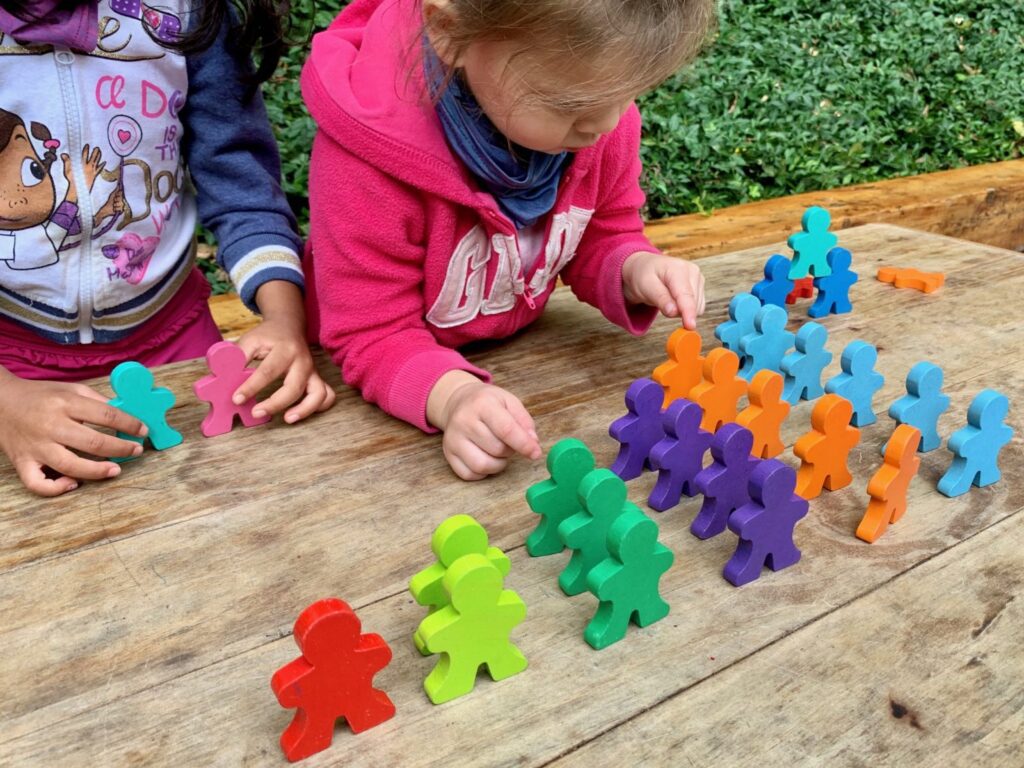
- Measurement is another example of math that your child uses in everyday life—and it doesn’t require rulers or scales. Young children learn measurement through comparison. They know which backpack is heavier, which cup has more juice, or who is taller. When they fill containers in the bath or sandbox, they’re experimenting with volume. When they line up objects from biggest to smallest, they’re ordering. Words like bigger, smaller, heavier, lighter, faster, and slower become part of their vocabulary as they explore how things relate to one another. These hands-on experiences give children a strong foundation in measurement long before they begin using numbers, rulers, and scales.
- Geometry is about shapes and how objects move and fit in space. It’s turning puzzle pieces until they fit, stacking blocks into towers, crawling under tables, or recognizing circles and squares in the environment. When children use words like under, over, next to, or inside, they’re describing spatial relationships. These geometry skills are built through movement and play and lay the foundation for future success in math and science.
So you see, your child is already doing math every single day. You don’t need worksheets, flashcards, or digital games. Instead, make sure you give your child ample opportunities for play, exploration, discussion, and wonder. When you notice these moments and name them by saying, "You found a pattern, that's math!" or your child says, "That one is heavier," and you point out, "That's measurement!" your child will begin to feel like a math whiz.
When children learn math through play, they build understanding that lasts. They’ve touched it, explored it, and truly made sense of it, creating a strong foundation for everything that comes next!